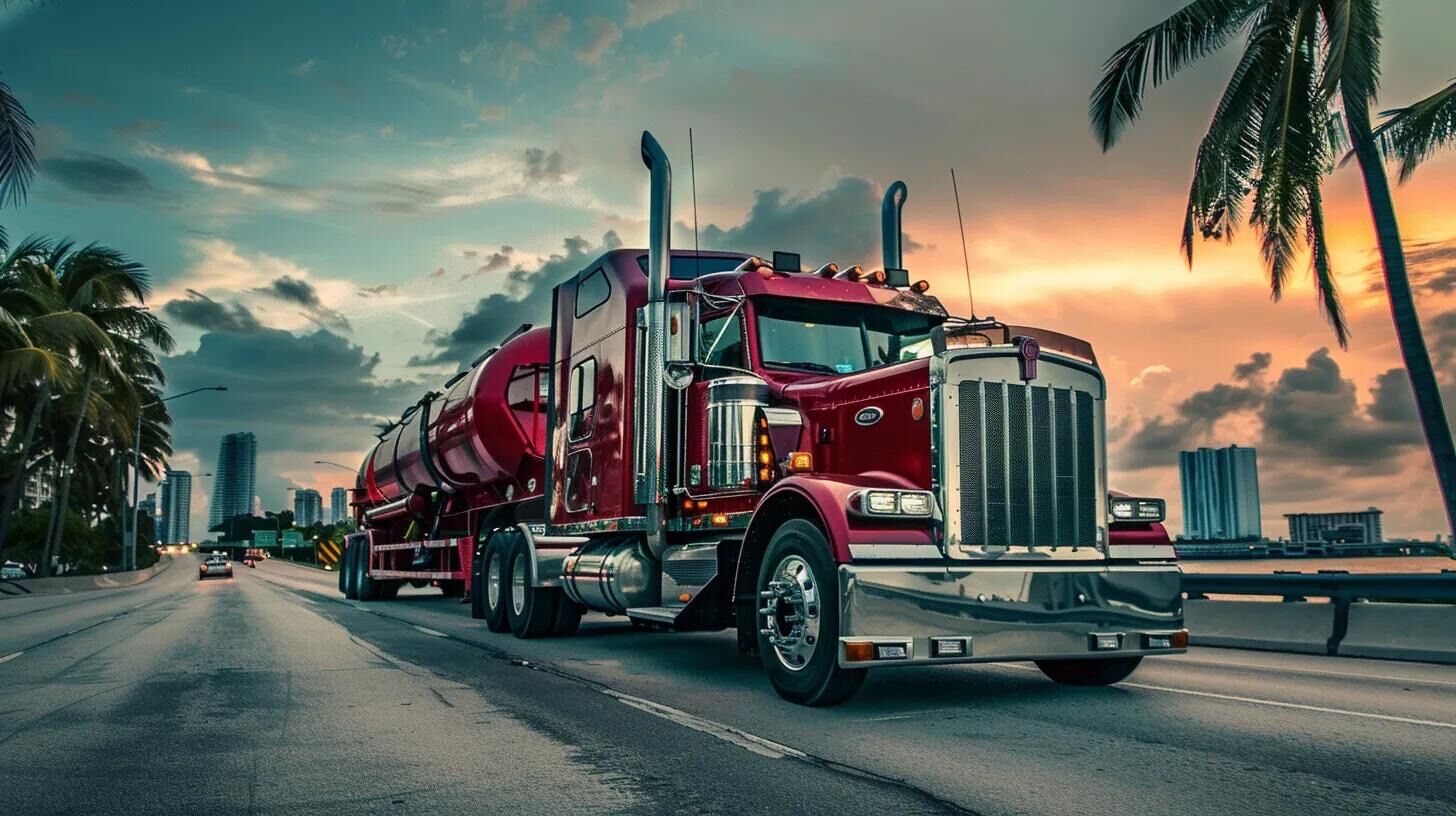
Truck accidents in Miami and South Florida are among the most catastrophic motor vehicle collisions on our roads. When an 18-wheeler or commercial truck collides with a passenger vehicle, the results are often devastating. According to the Federal Motor Carrier Safety Administration (FMCSA), large trucks are involved in approximately 13% of traffic fatalities despite representing only 10% of registered vehicles. The force and weight differential between a 70,000-pound fully loaded semi-truck and a 4,000-pound sedan means that occupants of passenger vehicles face significantly higher risks of severe injury or death.
Unlike collisions between two passenger vehicles, truck accidents involve multiple layers of complexity. There are often numerous parties who may share liability, extensive regulatory frameworks that apply only to commercial trucking operations, and insurance policies far exceeding those on standard vehicles. Understanding what to do immediately after a truck accident and knowing your legal rights under Florida law is critical to protecting your health, your claim and your future recovery.
If you or a loved one has been injured in a truck accident in Miami, this guide will walk you through the essential steps you need to take and explain how the legal process differs from other motor vehicle accident claims.
Immediate Steps After a Truck Accident
The moments immediately following a truck accident are critical both for your safety and for the success of your future claim. Your first priority should always be ensuring that everyone involved receives proper medical care and that the scene is secured for emergency responders.
Prioritize Safety and Call 911
If you are able to move safely, exit your vehicle and move to a safe location away from traffic. If you are injured or unable to move, remain in your vehicle with your seatbelt fastened and your hazard lights activated. Call 911 immediately to report the accident and request emergency medical services. When speaking with the dispatcher, provide the location, the number of vehicles involved, and a description of any visible injuries.
Do not attempt to move your vehicle unless it is creating an immediate traffic hazard that could cause additional accidents. In Florida, vehicles involved in accidents with injuries are required to remain at the scene until police have completed their initial investigation. Leaving the scene of an accident involving injury is a criminal offense under Florida Statute 316.027 and will significantly damage your credibility and legal position.
Document the Scene
If you are physically able and it is safe to do so, use your smartphone to photograph and video record the accident scene. Capture images from multiple angles showing the final position of all vehicles, the condition of the roadway, traffic signals, road signs, skid marks, debris patterns and weather conditions. Take close-up photos of vehicle damage on all vehicles involved. These photographs become crucial evidence in establishing how the collision occurred and who was at fault.
Before emergency responders clear the scene, note the truck driver's name, commercial license number, company name, and phone number. Record the trucking company's USDOT number (visible on the truck's door). Obtain the names and contact information of any witnesses to the accident. Dash camera footage from other vehicles on I-95, the Palmetto Expressway or other Miami area highways can provide critical objective evidence. Ask witnesses if they recorded video and, if so, get their information so you can follow up later.
Get Medical Attention
Even if you feel fine immediately after the accident, seek medical evaluation as soon as possible. Adrenaline and shock can mask serious injuries. Many truck accident injuries including traumatic brain injuries, spinal cord injuries and internal bleeding may not cause noticeable symptoms for hours or even days. Going to an emergency room or urgent care facility immediately creates a documented medical record linking your injuries to the accident, which is essential for your claim.
In Florida, you have access to Personal Injury Protection (PIP) insurance which covers up to $10,000 in medical expenses regardless of who was at fault. Be sure to inform the medical provider that you were injured in a motor vehicle accident so they can properly code the treatment and bill your PIP coverage. Keep all medical records, discharge paperwork and receipts from this initial evaluation.
Report the Accident
Florida law requires that you report any accident resulting in injury to law enforcement. In most cases, this will be handled by the police or highway patrol officers who respond to the scene. Request a copy of the police report when it is available. Under Florida Statute 316.066, police departments are required to prepare a written report on all accidents involving injury. Note the officer's name and badge number, the report number and the police department's phone number.
You should also report the accident to your own insurance company as soon as possible. However, be cautious about providing detailed statements. Simply inform them of the accident and that you are receiving medical treatment. Do not speculate about how the accident happened or discuss fault. You have the right to consult with an attorney before providing a detailed recorded statement to the other party's insurance company.
Why Truck Accidents Are Different From Car Accidents
Truck accident claims involve unique legal and factual complexities that do not exist in standard motor vehicle collision cases. Understanding these differences is critical to pursuing a successful claim.
Multiple Parties May Be Liable
In a car accident, typically only the at-fault driver is responsible for damages. In a truck accident, multiple parties may share liability. The truck driver may be one source of liability, but equally important are the trucking company that employed the driver, the manufacturer of the truck or its components, the cargo loading company responsible for securing the load, the maintenance provider who serviced the truck and possibly even a government entity responsible for road maintenance or design.
Under Florida's doctrine of respondeat superior, a trucking company can be held liable for the negligence of its drivers when those drivers were acting within the scope of their employment. Additionally, trucking companies can be held directly liable for negligent hiring, negligent supervision and negligent retention of dangerous drivers. These expanded theories of liability mean that truck accident victims often have multiple insurance policies and sources of recovery available.
FMCSA Regulations Create Additional Legal Standards
Commercial trucking is heavily regulated by the Federal Motor Carrier Safety Administration. These regulations impose strict standards that go far beyond the rules that apply to everyday drivers. Hours of service regulations (HOS) limit how many hours a driver can operate a commercial vehicle without a mandatory break. Commercial drivers must maintain detailed logs of their driving hours, and violations of HOS regulations constitute negligence per se under Florida law, meaning the violation itself can establish liability without requiring additional proof of negligence.
FMCSA regulations also require regular vehicle maintenance inspections, mandate that drivers possess a valid commercial driver's license (CDL), establish drug and alcohol testing requirements and set insurance minimum requirements for interstate carriers of $750,000 to $1,000,000. When a truck accident occurs, investigating whether the trucking company violated any of these regulatory standards can transform a case and provide powerful evidence of negligence.
Black Box and Electronic Logging Device Data Can Be Critical
Most commercial trucks are equipped with event data recorders (black boxes) that capture vehicle speed, acceleration, braking, steering input and other mechanical data. Additionally, modern trucks are required to use Electronic Logging Devices (ELDs) that record when drivers are on-duty, off-duty and driving. This data is invaluable in reconstructing how an accident occurred and can reveal whether a driver was fatigued, speeding or violated hours of service regulations.
Critically, this data can be overwritten or lost if not properly preserved immediately after an accident. Trucking companies are required to preserve this data once they have notice of an accident, but many companies fail to do so, either through negligence or intentional spoliation. Because of the risk of data loss, it is essential to send a spoliation letter to the trucking company immediately after the accident demanding preservation of all black box data, ELD records, maintenance logs, dispatch records and other documentary evidence.
Injuries Are Typically More Severe
A fully loaded commercial truck can weigh 70,000 pounds or more, while a typical passenger vehicle weighs 3,000 to 4,000 pounds. When these vehicles collide, the physics of the impact creates tremendous force concentrated on the lighter passenger vehicle. This weight differential means that truck accident victims commonly suffer catastrophic injuries including traumatic brain injuries, spinal cord injuries, multiple broken bones, internal bleeding, organ damage, severe burns and traumatic amputations.
The severity of truck accident injuries translates to significantly higher medical costs, longer recovery periods, greater lost wages and greater long-term care needs. Settlements and jury awards in truck accident cases are typically substantially higher than awards in comparable car accident cases, but this is because the injuries and their consequences are genuinely more severe.
Who Can Be Held Liable in a Florida Truck Accident?
Establishing liability in a truck accident requires identifying which parties breached their duty of care. Florida follows a modified comparative negligence system, meaning an injured party can recover damages even if partially at fault, as long as their negligence does not exceed that of the defendant. However, if a plaintiff is found to be 51% or more at fault, they cannot recover. Understanding which parties may be liable helps ensure all potential sources of recovery are pursued.
The Truck Driver
The truck driver is often the most obvious party at fault in an accident. Driver negligence can take many forms: fatigue and drowsy driving (often resulting from violations of hours-of-service regulations), distraction including cell phone use, driving under the influence of alcohol or drugs, speeding, failure to properly brake or steer, aggressive driving and failure to adjust driving for weather or road conditions.
Commercial drivers must possess a valid commercial driver's license (CDL). If a driver's CDL was expired, suspended or revoked, or if the driver lacks proper endorsements for the type of cargo being transported, this constitutes negligence. Additionally, driver medical records can reveal whether the driver was suffering from conditions that impaired their ability to drive safely, such as sleep apnea, which is common among commercial drivers.
The Trucking Company
Under respondeat superior, a trucking company is liable for the negligence of its drivers when those drivers are acting within the scope of their employment. But trucking companies can also be directly liable for negligent hiring, negligent supervision and negligent retention. If a trucking company hired a driver with a history of traffic violations, license suspensions or drug-related convictions without proper investigation, the company can be held liable for negligent hiring. Similarly, if a company failed to adequately supervise or train a driver or retained a driver despite knowledge of dangerous behavior, the company faces direct liability.
Additionally, trucking companies often face liability for violating their own safety policies or failing to enforce FMCSA regulations. Many truck accidents result from pressure placed on drivers to meet unrealistic delivery schedules, causing drivers to violate hours-of-service regulations or drive recklessly. When discovery reveals that a trucking company created a culture of non-compliance with safety regulations, this can create strong evidence of the company's direct negligence.
Truck or Parts Manufacturer
A defect in the design or manufacture of the truck itself, or in critical components such as brakes, tires, steering systems or coupling mechanisms, can cause or contribute to an accident. A brake system failure, a tire blowout or a defectively designed cabin that fails to protect occupants in a collision can all create manufacturer liability. These claims are based on products liability law and require establishing that the product contained a defect, that the defect existed at the time the product left the manufacturer's control and that the defect caused injury.
Cargo Loading Company
The company responsible for loading cargo onto the truck must ensure that the cargo is properly secured, evenly distributed and within legal weight limits. An unsecured load can shift during transport, affecting the truck's handling and stability. An overloaded truck cannot brake or maneuver effectively. If an accident was caused or contributed to by improper cargo loading, the loading company can be held liable.
Maintenance and Repair Provider
Commercial trucks must undergo regular inspections and maintenance to ensure critical safety systems are functioning properly. If a maintenance provider fails to properly repair a known defect or fails to identify and repair a defect during a routine inspection, the maintenance provider can be liable for any accident resulting from that failure. For example, if a truck's brakes were serviced just days before an accident and the accident was caused by brake failure, an investigation into the maintenance records could reveal that the technician failed to properly inspect or repair the brake system.
Critical Evidence to Preserve After a Truck Accident
Evidence is the foundation of any truck accident claim. Much of the critical evidence in truck accidents is fragile and can be lost, overwritten or destroyed very quickly. Taking immediate action to preserve evidence can mean the difference between a strong claim and a claim that falls apart.
Electronic Logging Device and Black Box Data
Electronic Logging Device records and event data recorder information are among the most important types of evidence in truck accident cases. This data can reveal the truck's speed, the driver's hours of service, instances of hard braking, harsh acceleration and other operational details that can establish how the accident occurred. However, ELD data can be overwritten after 30 to 60 days of operation, and black box data can be lost if the data system is not properly preserved. The moment you become aware of a truck accident, a formal spoliation letter demanding preservation of all electronic data must be sent to the trucking company.
Driver Logs and Hours of Service Records
Commercial drivers are required to maintain detailed logs documenting when they were on-duty, off-duty and driving. These logs can reveal whether a driver exceeded the maximum hours of service, took required breaks and complied with federal regulations. A driver's personal logbook, the motor carrier's records of the driver's HOS and the electronic logs from the truck all constitute important evidence. Additionally, dispatch records showing when the driver was instructed to depart, when they were expected to arrive and any communications pressuring the driver to meet unrealistic delivery schedules can establish that the trucking company created conditions leading to the accident.
Maintenance, Inspection and Repair Records
Trucking companies are required to maintain detailed records of all vehicle maintenance, inspections and repairs. These records can reveal whether the truck received regular inspections, whether any defects were noted and how those defects were addressed. If an accident was caused by brake failure, a transmission malfunction, a tire blowout or other mechanical failure, the maintenance records can establish whether the trucking company knew or should have known about the defect and failed to repair it.
Drug and Alcohol Testing Results
FMCSA regulations require that drivers undergo post-accident drug and alcohol testing within specified timeframes if the accident results in injury or significant property damage. These test results are critical evidence. If a driver tested positive for drugs or alcohol, or if the trucking company failed to conduct required testing, this evidence can establish or contribute to liability. Additionally, if a driver's prior drug or alcohol test results show a history of positive tests, this can be relevant to liability and punitive damages.
Scene Photography, Video and Witness Statements
Photographs and video from the accident scene are invaluable evidence. Document the position of all vehicles, the damage to each vehicle, roadway conditions, weather, time of day, traffic signals, road markings and any debris. Witness statements from people present at the scene or who observed the accident provide firsthand accounts of how the collision occurred. Dash camera footage from nearby vehicles can provide objective evidence of the accident and the actions of the vehicles involved immediately before the collision.
Medical Records Establishing Injury Causation
Comprehensive medical records from emergency room treatment, surgical procedures, hospitalization, rehabilitation therapy and ongoing medical treatment are essential. These records establish the nature and severity of your injuries and demonstrate that your injuries resulted from the accident. When medical records are created and documented immediately following the accident, they carry significant credibility. Delaying medical treatment makes it more difficult to establish that your injuries were caused by the accident rather than by other factors.
Florida Laws That Affect Your Truck Accident Claim
Several Florida statutes and legal principles directly affect truck accident claims. Understanding these laws is essential to protecting your rights and pursuing compensation within established legal timeframes.
Two-Year Statute of Limitations
Florida Statute 95.11 establishes a two-year statute of limitations for personal injury claims resulting from motor vehicle accidents. This deadline was changed from four years to two years in March 2023 under HB 837. This means you have exactly two years from the date of the accident to file a lawsuit. If you do not file within this timeframe, your claim is permanently barred and you lose all right to recovery, regardless of the merits of your case. This deadline applies strictly, and there are very limited exceptions.
Do not delay in seeking legal advice if you have been injured in a truck accident. While many cases are settled before reaching trial, the statute of limitations deadline applies to all cases. Waiting until the last moment to file a lawsuit creates unnecessary risk and limits your attorney's ability to conduct thorough investigation and discovery.
Modified Comparative Negligence and the 51% Bar
Florida follows a modified comparative negligence rule. This means that even if you were partially at fault for the accident, you can still recover damages from the other party as long as your negligence does not exceed the negligence of the defendant. However, Florida's law is stricter than some other states: if you are found to be 51% or more at fault, you cannot recover anything. This is known as the 51% bar. If you are 50% at fault and the defendant is 50% at fault, you can recover, but your damages are reduced by your percentage of fault.
In truck accident cases, it is relatively common for the at-fault party to argue that the victim bears some responsibility for the accident. Detailed evidence about how the accident occurred, expert testimony from accident reconstruction specialists and clear documentation of the truck driver's and trucking company's violations of law and safety standards are critical to establishing that the victim bears little or no fault.
Personal Injury Protection Insurance
Florida is a no-fault insurance state. This means that your own insurance company (called Personal Injury Protection or PIP insurance) covers your medical expenses and lost wages up to $10,000, regardless of who was at fault for the accident. PIP benefits are available immediately after an accident and do not require proving fault. However, PIP benefits are limited to $10,000 total, and this amount often covers only a portion of medical expenses in serious truck accidents.
After PIP benefits are exhausted, you can pursue a claim against the at-fault party's insurance or file a lawsuit to recover additional damages beyond the PIP limits. This is called a bodily injury claim. In serious truck accident cases, at-fault parties carry insurance policies with much higher limits than standard vehicle insurance, often $750,000 to $1,000,000 for interstate carriers.
Minimum Insurance Requirements for Commercial Trucks
Commercial trucking companies operating interstate are required by federal law to carry minimum liability insurance of $750,000. Trucking companies operating intrastate (within Florida) are required by state law to carry higher limits depending on the type and weight of cargo. These insurance requirements exist because the trucking industry recognizes the inherent risks posed by large trucks. When a truck accident occurs, injured parties have access to these substantial insurance policies.
Wrongful Death Claims
If a truck accident results in a death, the surviving family members may pursue a wrongful death claim under Florida law. Wrongful death claims seek to recover damages for lost financial support, loss of companionship, emotional suffering and funeral expenses. The statute of limitations for wrongful death claims is the same two years established by Florida Statute 95.11. If you have lost a loved one in a truck accident, it is essential to seek legal advice immediately to preserve your right to pursue a claim.
Common Injuries in Truck Accidents
Because of the weight differential between commercial trucks and passenger vehicles, truck accident injuries are typically severe and often result in permanent disability or long-term medical care requirements.
Traumatic brain injuries (TBI) are common in truck accidents where the head strikes the steering wheel, dashboard or side window. Even TBIs that do not cause loss of consciousness can result in permanent cognitive impairment, memory problems, difficulty concentrating, personality changes and emotional dysregulation.
Spinal cord injuries can result in partial or complete paralysis. Depending on the level of the spinal injury, a victim may lose function in their legs (paraplegia) or in all four limbs (tetraplegia). Spinal cord injuries require intensive rehabilitation and lifelong medical care, including assistive devices, home modifications and ongoing therapy.
Multiple broken bones are common in truck accidents. Fractures of the femur, pelvis, ribs and vertebrae can be life-threatening and may require surgery, immobilization and prolonged rehabilitation. Some fractures result in permanent limitations in function or mobility.
Internal bleeding, organ damage and crush injuries can occur even when external injuries are not apparent. These injuries may not become evident until hours or days after the accident. Injuries to the lungs, liver, kidneys and spleen can be fatal if not treated immediately.
Severe burns can result when the truck catches fire following a collision. Burn injuries require intensive medical treatment, often including skin grafting, and frequently result in permanent scarring, disfigurement and functional limitations.
Traumatic amputations can occur when limbs are trapped or crushed in the wreckage. Even with prompt medical care, severe crush injuries may require amputation. Amputation results in permanent disability and significant rehabilitation and adjustment challenges.
The medical costs associated with these injuries are substantial. Spinal cord injury care can cost over $1 million in the first year and hundreds of thousands annually throughout the patient's lifetime. Traumatic brain injury rehabilitation, physical therapy and ongoing medical care add up to comparable costs. When pursuing a truck accident claim, it is critical that your attorney understands the long-term nature of these injuries and the ongoing care and expenses they create.
How Mausner Group Can Help With Your Truck Accident Claim
At Mausner Group Injury Lawyers, we understand the unique challenges of truck accident cases. We have handled cases involving commercial trucking accidents, and we know the complexity of pursuing claims against well-insured trucking companies and their aggressive insurance carriers.
When you engage our firm, we immediately take action to preserve critical evidence. We send spoliation letters to the trucking company demanding preservation of black box data, electronic logging device records, driver logs, maintenance records, dispatch records and all other relevant evidence. We work with accident reconstruction specialists to establish how the accident occurred. We investigate the trucking company's hiring practices, training programs, safety policies and compliance with FMCSA regulations. We review driver personnel files for evidence of prior violations, failed drug tests or safety infractions.
We work closely with your medical providers to ensure that your medical records fully document the nature and severity of your injuries and the causal connection between those injuries and the accident. We understand that truck accident injuries often have long-term consequences, and we work with vocational rehabilitation specialists to establish your future lost earning capacity. We negotiate aggressively with the trucking company's insurance carriers and, if necessary, we file litigation and pursue your case through trial.
We represent injury victims on a contingency basis, which means we only recover a fee if we obtain compensation for you through settlement or judgment. You do not pay legal fees unless we win your case.
If you have been injured in a truck accident in Miami or South Florida, contact Mausner Group Injury Lawyers today for a free case review. Call us at 305-344-4878 to speak with an attorney about your claim.
Frequently Asked Questions About Truck Accidents in Miami
How long do I have to file a truck accident lawsuit in Florida?
Florida law gives you two years from the date of the accident to file a lawsuit for personal injuries resulting from a truck accident. This deadline is strictly enforced. Once the two-year period expires, you lose all right to pursue compensation, regardless of the strength of your case. While many cases are settled before reaching trial, the statute of limitations deadline applies to all cases. If you have been injured in a truck accident, contact an attorney immediately to protect your rights.
Can I recover damages even if I was partially at fault for the truck accident?
Yes, under Florida's modified comparative negligence rule, you can recover damages even if you were partially responsible for the accident, as long as your negligence does not exceed that of the defendant. However, Florida applies the 51% bar rule, which means that if you are found to be 51% or more at fault, you cannot recover anything. If you are 50% at fault and the other party is 50% at fault, you can recover, but your award is reduced by your percentage of fault. This is why detailed evidence about how the accident occurred is so important.
What is the difference between a claim under my own insurance and a claim against the at-fault party?
In Florida, your own Personal Injury Protection (PIP) insurance covers up to $10,000 in medical expenses and lost wages regardless of fault. This coverage is available immediately and does not require proving that the other party was at fault. However, PIP benefits are limited to $10,000 total. After PIP benefits are exhausted, you can pursue a bodily injury claim against the at-fault party's insurance or file a lawsuit. In truck accident cases, the at-fault party typically carries much higher insurance limits, often $750,000 to $1,000,000 for interstate carriers. A successful claim or lawsuit against the at-fault party can recover damages for medical expenses exceeding the PIP limit, lost wages, pain and suffering, and other damages not covered by PIP.
What should I do if the trucking company is demanding that I give a recorded statement?
Do not provide a recorded statement to the trucking company's insurance adjuster or representative without consulting with an attorney. You have the right to consult with a lawyer before providing any detailed statement. Insurance companies often use recorded statements to lock injured parties into factual claims that can later be challenged or used against them. In most cases, an attorney will negotiate with the insurance company and provide any necessary information on your behalf. Do not sign any settlement agreements or releases without having an attorney review the documents.
What types of damages can I recover in a truck accident claim?
In a truck accident claim, you can recover economic damages including medical expenses, rehabilitation costs, assistive devices, lost wages, future lost earning capacity and property damage to your vehicle. You can also recover non-economic damages for pain and suffering, emotional distress, loss of enjoyment of life and permanent disfigurement or disability. In cases where the at-fault party's conduct was particularly reckless or negligent, you may also recover punitive damages intended to punish the defendant and deter similar conduct in the future. The specific damages available depend on the facts of your case, the severity of your injuries and the jurisdiction in which your case is filed.
600+ 5-Star Google Reviews
Last Updated Thursday, March 26th, 2026
