

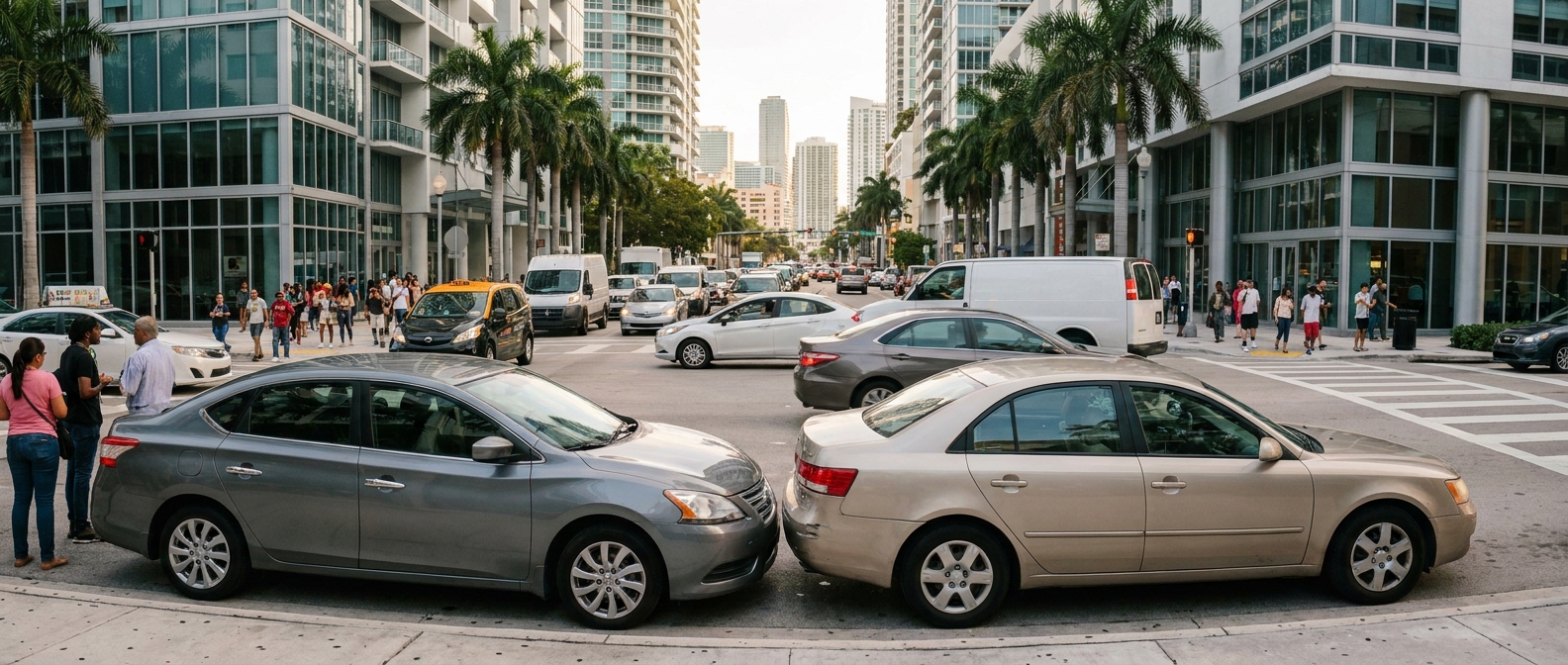
Miami is one of the largest rideshare markets in the country. Millions of Uber and Lyft trips are completed across South Florida every month, concentrated in neighborhoods where dense traffic, narrow streets, tourist congestion and active nightlife create dangerous conditions for everyone on the road. When a rideshare accident happens in one of these high-traffic corridors, the injuries can be severe and the legal process to recover compensation is more complex than a standard car accident case.
If you were injured in an Uber or Lyft accident in Miami Beach, Brickell, South Beach, Wynwood, Doral or anywhere in South Florida, understanding your rights is the first step toward getting the compensation you deserve. Between the rideshare insurance phase system, multiple potentially liable parties and the unique traffic patterns in these neighborhoods, having an attorney who knows both the law and the local landscape matters.
If you were injured in a rideshare accident in Miami Beach, Brickell or South Florida, call Mausner Group Injury Lawyers at 305.344.4878 for a free case review. We can evaluate your claim, identify all available insurance coverage and help you pursue full compensation.
Where Rideshare Accidents Happen Most in South Florida
Rideshare accidents are not evenly distributed across Miami-Dade and Broward counties. They cluster in specific neighborhoods and corridors where rideshare demand is highest and road conditions are most dangerous.
Miami Beach and South Beach
Miami Beach is one of the highest-concentration rideshare zones in Florida. Collins Avenue, Ocean Drive and the MacArthur Causeway handle a constant flow of Uber and Lyft pickups and drop-offs, especially during weekends, holidays and major events like Art Basel, Ultra Music Festival and Spring Break. The combination of tourist pedestrians unfamiliar with local traffic patterns, rideshare drivers stopping abruptly in travel lanes for pickups, narrow one-way streets with limited visibility and heavy nightlife traffic between midnight and 4 AM creates conditions where serious accidents involving passengers, pedestrians and cyclists happen regularly.
The causeways connecting Miami Beach to the mainland (MacArthur, Julia Tuttle and Venetian) are particularly dangerous during peak hours. Rideshare drivers navigating these corridors face stop-and-go congestion, aggressive lane changes and sudden slowdowns that lead to rear-end collisions and multi-vehicle pileups.
Brickell and Downtown Miami
Brickell is Miami's financial district and one of the densest residential neighborhoods in the Southeast. The area's high-rise population generates enormous rideshare demand for daily commuting, nightlife and restaurant traffic. SE 1st Avenue, Brickell Avenue and the Brickell City Centre area see constant Uber and Lyft activity.
The most common accident scenarios in Brickell involve rideshare drivers making sudden stops in active traffic lanes to pick up or drop off passengers outside residential towers, collisions at congested intersections along Brickell Avenue and SE 8th Street, accidents in parking garages and loading zones where rideshare drivers compete for limited curb space and pedestrian strikes near the Metromover stations where foot traffic spills into the street. Construction activity throughout Brickell further narrows already tight roadways and creates unexpected lane shifts that contribute to collisions.
Wynwood and the Design District
Wynwood has transformed from a quiet warehouse district into one of Miami's busiest nightlife and dining destinations. The neighborhood's grid of narrow streets was not designed for the volume of rideshare traffic it now handles, especially during Art Walk events, weekend nights and festival periods. NW 2nd Avenue and NW 26th Street see heavy Uber and Lyft activity, with drivers frequently double-parking or stopping in the middle of the road to complete pickups.
Pedestrian density in Wynwood is exceptionally high during peak hours, and the neighborhood's lack of dedicated rideshare pickup zones forces drivers and riders into the street. Accidents involving pedestrians struck by rideshare vehicles or by drivers trying to navigate around stopped Uber and Lyft cars are a recurring problem.
Doral and West Miami-Dade
Doral's concentration of corporate offices, warehouses and residential developments generates significant rideshare demand during commuting hours. NW 36th Street, NW 87th Avenue and the Doral CityPlace area handle heavy Uber and Lyft traffic. The wide, high-speed arterial roads in this area create different risks than the dense urban corridors of Brickell and Miami Beach. Rideshare accidents in Doral more often involve high-speed rear-end collisions, intersection T-bone crashes and accidents on multilane roads where sudden lane changes lead to sideswipe collisions.
Palmetto Bay, Coral Gables and Coconut Grove
These established South Florida neighborhoods generate steady rideshare demand from dining, shopping and residential trips. Old Cutler Road, US-1 through Coral Gables and the narrow residential streets of Coconut Grove each present distinct hazards. Tree-lined roads with limited lighting, roundabouts that confuse out-of-area rideshare drivers and pedestrian-heavy village centers all contribute to accident risk.
Fort Lauderdale and Broward County
Fort Lauderdale's Las Olas Boulevard, the beach strip along A1A and the areas around Fort Lauderdale-Hollywood International Airport are major rideshare hotspots. Airport pickups and drop-offs generate a high volume of Uber and Lyft trips on congested airport access roads, while the beach corridor sees the same tourist-driven rideshare patterns as Miami Beach. I-95 and I-595 interchange areas are frequent sites of high-speed rideshare accidents during commuting hours.
Why Location Matters in a Rideshare Accident Claim
The specific location of your rideshare accident affects your claim in several important ways that go beyond the basic facts of the collision.
Local Traffic Patterns Support Your Case
Every neighborhood has documented accident patterns. Miami Beach intersections have crash history data showing recurring collision types. Brickell construction zones have documented lane closures and traffic rerouting that contribute to accidents. An attorney familiar with these local patterns can use traffic engineering data, crash reports and area-specific evidence to strengthen your claim and counter arguments from the insurance company that you were partially at fault.
Surveillance and Evidence Availability
Dense urban neighborhoods like Brickell, Wynwood and Miami Beach have extensive surveillance camera networks from businesses, residential buildings and traffic systems. This footage can capture the moments before and during a rideshare accident, providing objective evidence of who was at fault. However, surveillance footage is often overwritten within days or weeks. Securing this evidence quickly is critical, and an attorney can send preservation demands to nearby businesses and property managers before the footage disappears.
Witness Availability
High-traffic areas mean more potential witnesses. Pedestrians, restaurant staff, valets, security guards and other drivers may have seen the accident. Identifying and interviewing these witnesses early strengthens your claim, especially in disputed liability situations where the rideshare driver or the other motorist gives a different account of what happened.
Insurance Coverage in South Florida Rideshare Accidents
The insurance available in your rideshare accident claim depends on the driver's status in the app at the time of the crash, not the location of the accident. Under Florida Statute 627.748, coverage works in three phases.
Phase 1 (app on, no ride accepted): $50,000 per person for bodily injury, $100,000 per accident and $25,000 for property damage.
Phase 2 (ride accepted, en route to pick up): $1 million in third-party liability plus uninsured and underinsured motorist coverage.
Phase 3 (passenger in the vehicle): $1 million in third-party liability plus uninsured and underinsured motorist coverage.
Determining which phase applies requires obtaining trip data, GPS records and app activity logs from Uber or Lyft. In high-traffic South Florida neighborhoods where drivers frequently toggle between apps and switch between rideshare and food delivery platforms, establishing the precise app status at the moment of impact can be especially challenging. Your attorney needs to act quickly to preserve this digital evidence before it is deleted or overwritten.
Florida's no-fault PIP insurance also applies. Every Florida driver carries at least $10,000 in Personal Injury Protection coverage that pays initial medical expenses regardless of fault. You must seek medical treatment within 14 days of the accident to qualify for PIP benefits.
Comparative Negligence and South Florida Rideshare Accidents
Florida's modified comparative negligence system under HB 837 reduces your compensation by your percentage of fault. If you are found more than 51 percent at fault, you are barred from recovering any damages.
In South Florida's complex traffic environments, insurance companies aggressively argue shared fault. They may claim you jaywalked in Miami Beach, that you stepped into a Brickell intersection against the signal, that you were distracted on your phone in Wynwood or that you made an unsafe lane change on I-95. Strong evidence from the accident scene, including photos, surveillance footage, witness statements and the police report, is essential to protecting the full value of your claim.
The Two-Year Filing Deadline
Under Florida Statute 95.11, you have two years from the date of the accident to file a personal injury lawsuit. This deadline was reduced from four years to two years under HB 837 in March 2023. Missing this window permanently bars your claim regardless of how serious your injuries are.
The shortened deadline makes early action essential, especially in South Florida rideshare cases where digital evidence from the app, surveillance footage from local businesses and witness memories all degrade or disappear over time.
How Mausner Group Injury Lawyers Handles South Florida Rideshare Accident Cases
At Mausner Group Injury Lawyers, we have handled Uber and Lyft accident claims across Miami Beach, Brickell, Wynwood, Doral, Palmetto Bay, Coral Gables, Coconut Grove, Fort Lauderdale and throughout South Florida. Attorney Eric Mausner, a former Miami-Dade County prosecutor licensed in Florida, New York, New Jersey, Washington D.C. and Pennsylvania, knows the local traffic patterns, the high-risk corridors and the specific evidence strategies that make the difference in South Florida rideshare accident cases. Eric has been recognized by Super Lawyers, National Trial Lawyers Top 40 Under 40, Best Lawyers and Avvo Top Attorney.
We move fast on South Florida rideshare cases because local evidence has a short shelf life. From day one, we send preservation demands to Uber or Lyft for trip data and app records, secure surveillance footage from businesses near the accident scene, identify and interview witnesses, determine the correct insurance phase and all available coverage, and build a comprehensive damages file that documents every medical expense, lost wage and impact on your daily life.
We work on a contingency fee basis, which means you pay nothing unless we recover compensation for you. If you were injured in an Uber or Lyft accident in Miami Beach, Brickell, Wynwood or anywhere in South Florida, contact Mausner Group Injury Lawyers today for a free case review. Call 305.344.4878 to speak with an attorney about your rideshare accident claim.
Frequently Asked Questions About Rideshare Accidents in South Florida
Are Uber and Lyft Accidents More Common in Miami Beach Than Other Parts of Florida?
Miami Beach consistently ranks among the highest-concentration areas for rideshare activity in Florida due to its tourism industry, nightlife and limited parking. Higher rideshare volume combined with dense pedestrian traffic, narrow streets and causeway congestion creates conditions where accidents happen more frequently than in less dense areas of the state.
Does It Matter Where in South Florida My Rideshare Accident Happened?
The location does not change the insurance coverage or legal deadlines that apply to your case, but it does affect the evidence available to prove your claim. Neighborhoods like Brickell and Miami Beach have more surveillance cameras, more potential witnesses and documented traffic patterns that an attorney can use to strengthen your case. The specific intersection or corridor where the accident occurred may also have a history of similar crashes that supports your claim.
What Should I Do if I Was Hit by an Uber or Lyft on Miami Beach?
Call 911 and get medical attention immediately. Document the scene with photos of all vehicles, your injuries, the road conditions and the rideshare driver's vehicle. Note whether the driver had a rideshare decal or phone mount visible. Get the driver's name, insurance information and contact details. File a police report and do not give recorded statements to any insurance company before speaking with an attorney.
Can I File a Claim if I Was a Pedestrian Hit by a Rideshare Driver in Brickell?
Yes. Pedestrians injured by rideshare drivers in Brickell or anywhere in Florida have the right to file a personal injury claim against the at-fault driver and potentially against the rideshare platform's insurance policy. The coverage available depends on the driver's app status at the time of the collision. Your own PIP coverage also applies regardless of fault.
How Long Do I Have to File a Rideshare Accident Lawsuit in South Florida?
You have two years from the date of the accident to file a personal injury lawsuit under Florida Statute 95.11. This deadline was reduced from four years under HB 837 in March 2023. The two-year deadline applies to all rideshare accident claims in Florida regardless of where in South Florida the accident occurred.