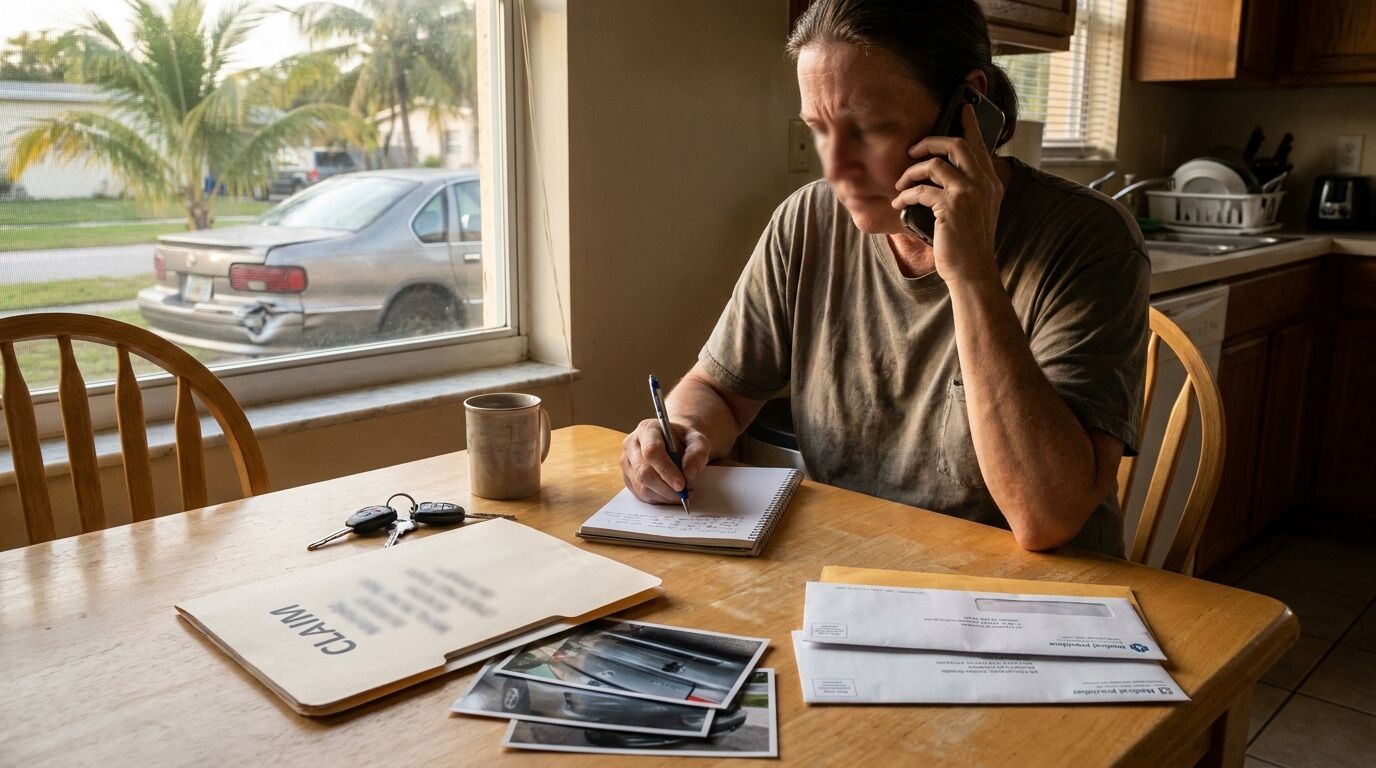
The adjuster who calls you two days after a crash is friendly, sympathetic, and often genuinely pleasant. They are also a trained negotiator employed by a company whose profit depends on paying you as little as possible, calling at the exact moment you are hurting, missing work, and most likely to take fast money. Both things are true at once, and forgetting the second one is the most expensive mistake injury victims make.
Nothing about that call is casual. The questions are designed, the timing is designed, and the early settlement offer is designed. Adjusters resolve thousands of claims; you will handle a handful in your life. That asymmetry, not dishonesty, is what makes the encounter dangerous.
This article walks through the tactics adjusters actually use after Miami crashes, what to say and not say, and when Florida law punishes an insurer for crossing the line from hard bargaining into bad faith. If an adjuster is already calling about your crash, the Miami car accident lawyers at Mausner Group Injury Lawyers offer free consultations, and the call to us costs the insurer leverage, not you.
The Tactics, In the Order You Will Meet Them
The Fast, Friendly First Call
The at-fault driver's insurer often calls within days, before you know the extent of your injuries. The warmth is real technique: People repay friendliness with information, and information is what prices your claim down.
The Recorded Statement
You will be told a recorded statement is routine and required. From the other driver's insurer, it is neither. Its purpose is to lock your account in early, before you understand your injuries, and to harvest phrases for later use. "I'm feeling better" becomes evidence your injuries were minor. "I didn't see him" becomes fault points under Florida's 51 percent bar, which we explained in our comparative negligence guide. You are not obligated to give the other side's insurer a recorded statement, and you should not do it without counsel.
The Blanket Medical Authorization
A broad release lets the insurer trawl your entire medical history for anything to blame your injuries on: an old back complaint, a prior crash, a decade-old MRI. Insurers are entitled to records relevant to the injury claimed, not your lifetime file. Blanket authorizations should never be signed as presented.
The Quick Lowball
A check offered in the first weeks, sometimes at your door, priced long before anyone knows whether your shoulder needs surgery. Accepting it releases the claim forever; there is no reopening when the MRI comes back worse. Early money is cheap for exactly that reason.
The Delay Game
When quick money fails, time becomes the weapon: unreturned calls, repeated document requests, claims "still in review." Delay works because bills mount and desperation discounts claims. It also quietly burns your two-year filing deadline, which is the insurer's favorite clock.
The Surveillance File
In larger claims, expect your public social media to be read and, sometimes, an investigator's camera. A single photo of you smiling at a barbecue becomes Exhibit A that you are fine. The lesson is not paranoia; it is that your claim is being documented by both sides, and only one of them tells you.
The Treatment Gap Argument
Every week between the crash and your first appointment, and every missed follow-up, becomes an argument that you were not really hurt. Florida sharpens this with the 14-day PIP rule we covered in our no-fault guide: wait too long and benefits are forfeited outright.
What to Do Instead
The counter-playbook is short. Report the crash to your own insurer promptly, as your policy requires, and be factual and brief. Decline recorded statements to the other side's insurer. Sign nothing, especially medical authorizations and releases, without review. Get medical care immediately and follow the treatment plan, because the medical record is the claim. Keep everything: photos, bills, the claim number, every letter. Stay off social media about the crash entirely. And before accepting any offer, find out what the claim is actually worth, because you can only sell it once.
When Hard Bargaining Becomes Bad Faith
Florida law tolerates tough negotiation. It does not tolerate an insurer that refuses to settle when it could and should have, misrepresents policy terms, or stalls without basis. Section 624.155, Florida Statutes, gives claimants a bad faith remedy, preceded by a formal Civil Remedy Notice that gives the insurer a cure window. In the right case, bad faith exposure makes an insurer liable beyond its own policy limits, which changes the negotiation completely. Bad faith is a lawyer's tool, technical and procedural, but you should know it exists, because insurers price claims differently when the other side knows how to use it.
The Real Reason Represented Claims Settle Higher
Adjusters evaluate two numbers: what your claim is worth in court, and what you will accept. Unrepresented, those numbers are far apart, and the gap is the insurer's margin. Representation collapses the gap, because the insurer's alternative to paying fairly becomes a trial it must staff and might lose. That, more than any negotiation trick, is why the phone call to a lawyer changes the math. Our Miami car accident practice page explains how we handle insurers from the first call through trial.
Frequently Asked Questions About Insurance Adjusters
Do I have to give the insurance company a recorded statement?
Not to the other driver's insurer, and you should not without legal advice. Your own policy requires cooperation with your own insurer, which can include a statement, but even that should be factual and brief. Recorded statements exist to lock in your account before your injuries are understood.
Should I accept the insurance company's first offer?
Almost never. First offers are made before the full extent of injuries is known and are priced to close claims cheaply. Accepting one releases the claim permanently, with no ability to reopen it if your condition worsens.
What should I not say to an insurance adjuster?
Avoid speculating about fault, minimizing injuries, or narrating details beyond the basic facts. Phrases like "I'm fine" or "I didn't see them" are used to cut value and shift fault. Provide the claim number basics and let the investigation establish the rest.
Can the insurance company look at my social media?
Yes, and in significant claims it will. Public posts are collected and used to argue your injuries are exaggerated, often stripped of context. The safest practice during a claim is not to post about your activities, your health, or the crash at all.
What is insurance bad faith in Florida?
An insurer that refuses a reasonable settlement it should have accepted, misrepresents the policy, or stalls without basis may be liable under Florida Statute 624.155, after a Civil Remedy Notice gives it a chance to cure. Bad faith exposure can put the insurer on the hook beyond its policy limits.
How long do I have before the insurer no longer has to deal with me?
Florida gives you two years from the crash to file suit, and the insurer's obligation to negotiate meaningfully ends with it. Delay tactics are aimed at that deadline, which is why a slow-moving claim is a reason to get counsel, not to wait more patiently.
Let the Adjuster Deal With Us Instead
You handle healing. We handle the professional negotiation of your claim. Mausner Group Injury Lawyers deals with insurers across Miami-Dade and South Florida every day, and founding partner Eric J. Mausner brings a former prosecutor's discipline to every file.
Call 305-344-4878 for a free consultation, available 24/7. You pay nothing unless we win.
This article is for general informational purposes only and does not constitute legal advice. Florida law referenced includes Fla. Stat. 624.155, 627.736, 768.81, and 95.11. Laws change; consult a licensed Florida attorney for advice specific to your situation.
