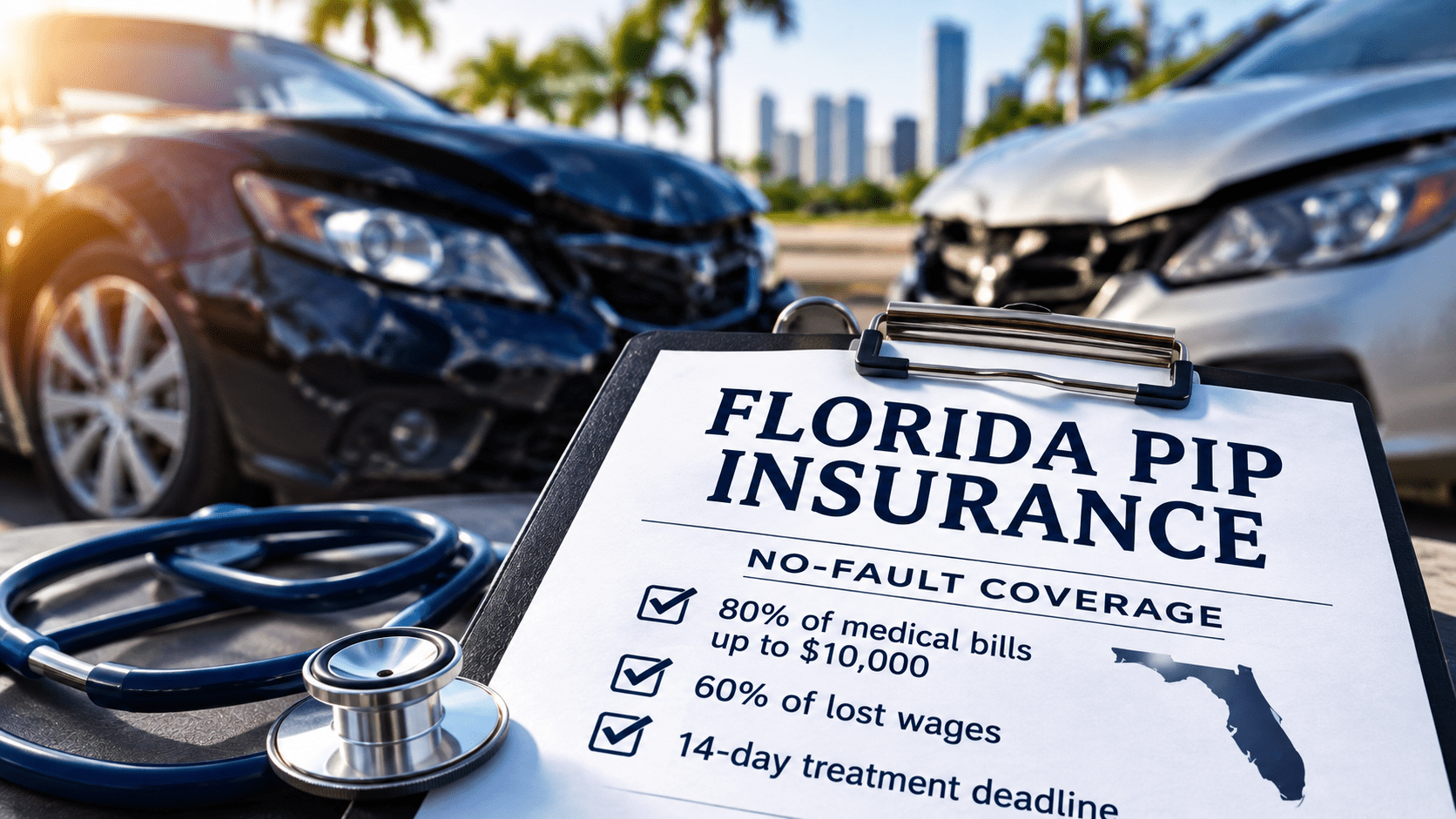
Florida's Personal Injury Protection coverage, or PIP, pays 80 percent of your reasonable medical expenses and 60 percent of your lost wages, up to $10,000 total, after a car accident, regardless of who caused the crash. That is what makes Florida a no-fault state: Your own policy pays first, even when the other driver was entirely to blame.
There is a catch that costs Floridians money every day. You must seek medical treatment within 14 days of the accident, or PIP pays nothing at all. And unless a medical provider determines you had an emergency medical condition, your benefit can be capped at $2,500 instead of $10,000.
This article explains what PIP covers, the deadlines and traps built into Florida Statute 627.736, what happens when $10,000 is not close to enough, and how injured people step outside the no-fault system to hold an at-fault driver accountable. If you were hurt in a crash anywhere in South Florida, the Miami car accident lawyers at Mausner Group Injury Lawyers offer free consultations at 305-344-4878.
What PIP Pays For
Every Florida driver must carry $10,000 in PIP coverage. After a crash, that coverage pays:
- 80 percent of reasonable and necessary medical expenses related to the accident
- 60 percent of lost income while your injuries keep you from working
- Replacement services, meaning reasonable costs of things you can no longer do yourself, such as childcare or household work
- A $5,000 death benefit, paid in addition to the medical and disability benefits used
PIP follows the person, not just the car. Your policy generally covers you as a driver, as a passenger in someone else's vehicle, and even as a pedestrian or bicyclist struck by a car. Resident relatives in your household are typically covered under your policy, as well.
One group is notably excluded: motorcyclists. PIP does not cover motorcycle riders, which changes the entire structure of a motorcycle injury claim.
The 14-Day Rule: The Deadline That Kills Claims
Florida Statute 627.736 requires you to receive initial medical treatment within 14 days of the crash to be eligible for PIP benefits. Miss the window and your $10,000 in coverage evaporates, no matter how legitimate your injuries are.
The rule punishes the most human response to a crash: waiting to see if the pain goes away. Soft tissue injuries, concussions, and disc injuries frequently feel manageable for days before they worsen. By the time many people accept that something is wrong, the deadline has passed.
The practical advice is simple. Get examined promptly after any crash with real impact, by an ER, an urgent care clinic, or your physician, even if you believe you are fine. The visit protects both your health and your benefits.
The $2,500 Emergency Medical Condition Trap
Even inside the 14-day window, the full $10,000 is not automatic. Unless a physician, dentist, or supervised practitioner determines you had an emergency medical condition, your PIP benefit is limited to $2,500.
The determination turns on documentation, which is one reason the words used at your first medical visit matter. People who minimize their symptoms to a doctor, a common instinct, sometimes find their benefits capped by a record that undersells their injury.
Did Florida Repeal PIP? No.
Despite years of repeal bills and a steady stream of headlines, Florida's no-fault law remains fully in effect in 2026, and the 14-day rule still applies. Repeal efforts that would have replaced PIP with mandatory bodily injury coverage have repeatedly stalled in the Legislature. Until that changes, every Florida driver needs to understand the system as it exists, not as proposed.
Why $10,000 Does Not Go Far
PIP was designed decades ago, and $10,000 has not been adjusted since. A single emergency room visit with imaging can consume most of the limit. An ambulance ride, an MRI, and a few weeks of treatment will exhaust it entirely.
When your damages exceed PIP, the question becomes whether you can pursue the at-fault driver directly, and Florida law answers with an injury threshold.
Stepping Outside No-Fault: The Serious Injury Threshold
Florida Statute 627.737 allows you to sue an at-fault driver for pain and suffering only when your injuries cross a threshold, including:
- Significant and permanent loss of an important bodily function
- Permanent injury within a reasonable degree of medical probability
- Significant and permanent scarring or disfigurement
- Death
Economic damages beyond PIP, such as unpaid medical bills and lost wages, can also be pursued against the at-fault driver. This is the point where a no-fault claim becomes a liability case, with fault, evidence, and insurance coverage all in dispute, and where our guide on who is at fault in a Florida car accident becomes relevant.
One more South Florida reality belongs in this picture: A large share of Florida drivers carry no bodily injury coverage at all, and Miami-Dade consistently ranks among the worst areas in the state for uninsured drivers. Uninsured motorist coverage on your own policy is often what actually pays a serious injury claim, and it is the single most important optional coverage a Florida driver can buy.
What This Means Right After a Crash
Three practical rules follow from how PIP works. Treat within 14 days, without exception. Describe your symptoms fully and honestly at every medical visit. And before accepting that $10,000 is all there is, have someone evaluate whether your injuries cross the threshold and what coverage actually exists, including UM benefits you may not know you carry. Our Miami car accident practice page explains how that evaluation works, and the consultation costs nothing.
Frequently Asked Questions About Florida PIP
What does PIP cover in Florida?
PIP pays 80 percent of reasonable medical expenses and 60 percent of lost wages, up to $10,000 total, plus replacement services and a $5,000 death benefit. It pays regardless of who caused the accident, and it covers you as a driver, passenger, pedestrian, or bicyclist.
What is Florida's 14-day rule?
You must receive initial medical treatment within 14 days of a car accident to be eligible for any PIP benefits under Florida Statute 627.736. Missing the deadline forfeits the coverage entirely, which is why prompt medical evaluation after a crash matters even if you feel fine.
Did Florida get rid of no-fault insurance?
No. Florida's PIP and no-fault system remains fully in effect in 2026. Repeal legislation has been proposed repeatedly, but has not passed, and the 14-day rule and $10,000 limit still apply.
Why did I only get $2,500 from PIP?
Unless a qualifying medical provider determined that you had an emergency medical condition, PIP benefits are capped at $2,500 instead of $10,000. The determination depends on your medical records, and it can sometimes be obtained after the initial visit through further evaluation.
Can I sue the other driver if my bills exceed $10,000?
You can pursue the at-fault driver for economic damages beyond PIP, and for pain and suffering if your injuries meet Florida's serious injury threshold, which includes permanent injury, significant scarring, or death. Whether a claim is viable also depends on the driver's insurance and your own uninsured motorist coverage.
Does PIP cover motorcycle accidents?
No. Florida's PIP statute excludes motorcyclists, so a rider's medical bills are pursued through health insurance, medical payments coverage, or a claim against the at-fault driver. This exclusion is one of the most important differences in how motorcycle cases are handled.
Questions About Your Coverage After a Miami Crash?
PIP is the beginning of a Florida injury claim, not the end of it. If your bills are climbing past $10,000, your benefits were capped at $2,500, or an insurer is disputing your treatment, Mausner Group Injury Lawyers can tell you exactly where you stand.
Call 305-344-4878 for a free consultation, available 24/7. You pay nothing unless we win.
This article is for general informational purposes only and does not constitute legal advice. Florida law cited includes Fla. Stat. 627.736 and 627.737. Laws change; consult a licensed Florida attorney for advice specific to your situation.
