
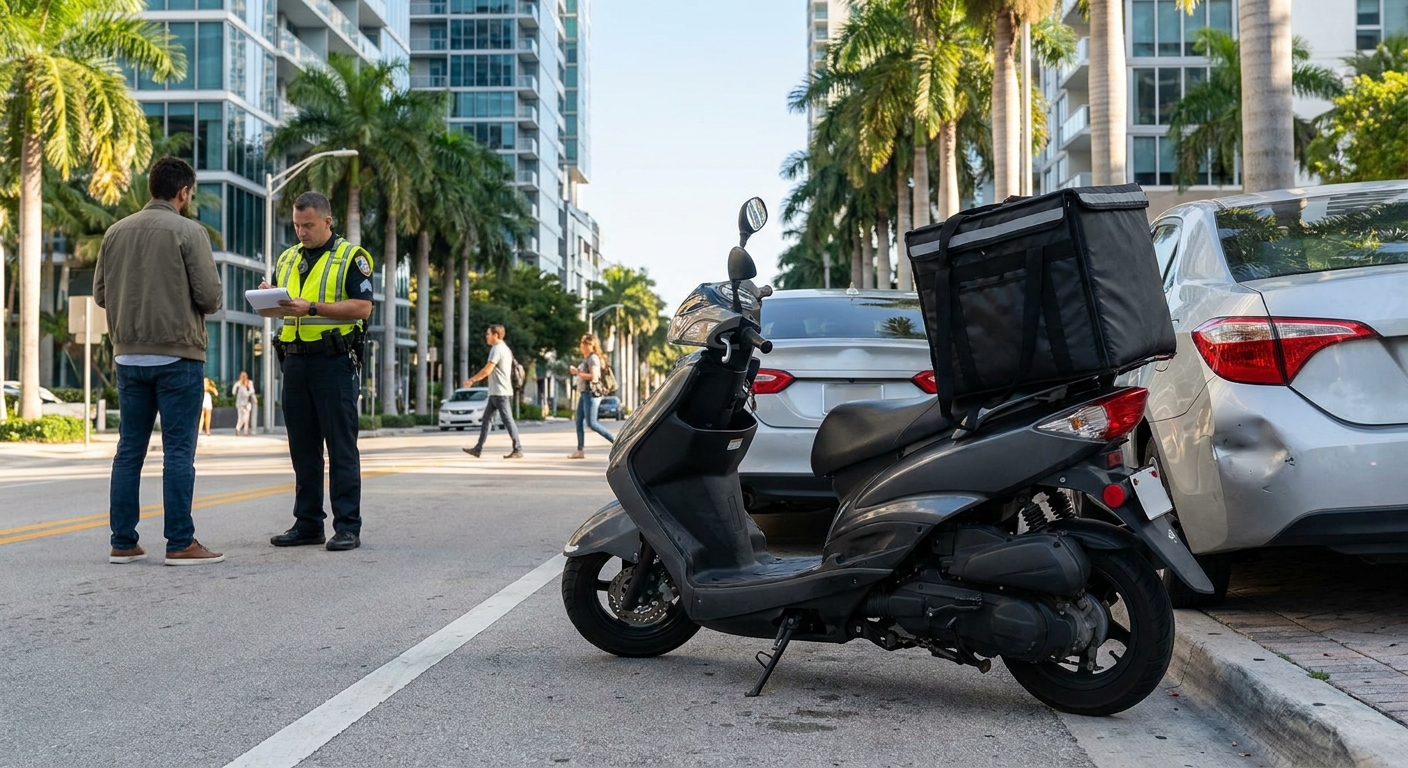
Food delivery has become a part of daily life in Miami. Uber Eats, DoorDash, Grubhub and Instacart drivers crisscross the city from Brickell to Miami Beach, racing to deliver meals and groceries as quickly as possible. The pressure to complete deliveries fast creates real dangers for pedestrians, cyclists and other drivers sharing the road.
If you were injured in an accident caused by a food delivery driver in Miami or anywhere in Florida, you may be entitled to significant compensation. But food delivery accident claims are more complicated than typical car accident cases because multiple insurance policies, platform agreements and liability questions come into play. Understanding who is responsible and what coverage applies is the first step toward recovering what you deserve.
If you were hit by a food delivery driver in Miami, call Mausner Group Injury Lawyers at 305-344-4878 for a free case review. We can evaluate your claim, identify all available insurance coverage and help you understand your legal options.
Who Is Liable in a Food Delivery Accident in Florida?
Determining who is at fault in a food delivery accident is the first critical step in pursuing compensation. Florida law allows injured people to hold negligent parties accountable, but the answer to "who pays" depends on the specific circumstances of the crash.
The Delivery Driver
The most direct source of liability is the delivery driver who caused the accident. Food delivery drivers are under constant pressure to complete orders quickly, which leads to dangerous driving behaviors, including speeding, running red lights, making illegal U-turns, checking the delivery app while driving, and double-parking in active traffic lanes. If the driver's negligence caused your injuries, you can file a claim against the driver's personal auto insurance and any applicable commercial coverage from the delivery platform.
The Delivery Platform (Uber Eats, DoorDash, Grubhub)
This is where food delivery accidents become more complex than standard car crashes. Uber Eats, DoorDash, Grubhub and similar companies classify their delivery drivers as independent contractors rather than employees. This classification is designed to shield the platforms from direct vicarious liability for accidents caused by their drivers.
However, the platforms do maintain commercial insurance policies that provide coverage during active deliveries. The key question is whether the driver was actively engaged in a delivery at the time of the crash. This mirrors the insurance phase system that governs rideshare accidents under Florida Statute 627.748, where the driver's status in the app at the moment of the collision determines which coverage applies and how much is available.
A Third-Party Driver
In many food delivery accidents, a third-party driver causes the collision. If another motorist ran a red light and struck a DoorDash driver who then collided with your vehicle, the at-fault third-party driver's insurance would be the primary source of compensation. Your own PIP coverage and any applicable uninsured or underinsured motorist coverage may also come into play.
The Restaurant or Business
In limited cases, a restaurant or business may share liability if its actions contributed to the accident. If a restaurant required drivers to park in a dangerous location or created hazardous conditions in a pickup area that led to a collision, the business could bear partial responsibility under Florida premises liability law.
Insurance Coverage for Food Delivery Accidents in Florida
Insurance is the foundation of any food delivery accident claim. The coverage available depends on which platform the driver worked for and whether they were actively completing a delivery at the time of the crash.
Uber Eats
Because Uber Eats operates under the Uber umbrella, its drivers are covered by a tiered insurance system similar to Uber rideshare. When the driver is logged into the app and actively completing a delivery (en route to the restaurant or delivering to the customer), Uber provides up to $1 million in third-party liability coverage. When the driver is logged in, but waiting for a delivery request, the available coverage drops to $50,000 per person for bodily injury, $100,000 per accident and $25,000 for property damage. When the app is off, only the driver's personal auto insurance applies.
DoorDash
DoorDash provides excess auto liability coverage of up to $1 million when a Dasher is actively on a delivery, from the time they accept an order through completion. This coverage is excess, meaning it applies after the driver's personal auto insurance has been exhausted. If the driver does not carry personal auto insurance or their insurer denies the claim due to a commercial activity exclusion, navigating the DoorDash policy requires experienced legal representation to ensure coverage is activated.
Grubhub and Other Platforms
Grubhub and other delivery platforms maintain similar liability coverage during active deliveries, though the specific terms and coverage limits vary by platform and by state. The key principle across all platforms is the same: Coverage is highest during active deliveries and lowest or nonexistent when the driver is not engaged with the app.
The Driver's Personal Auto Insurance
Most personal auto insurance policies exclude coverage for accidents that occur during commercial delivery activity. This means the driver's personal insurer may deny the claim entirely, arguing that the driver was using their vehicle for a commercial purpose not covered under the policy. This denial creates a gap that the delivery platform's commercial insurance is supposed to fill, but insurers on both sides frequently point fingers at each other to avoid paying.
An experienced attorney identifies every available policy, cuts through the finger-pointing between insurers and pursues compensation from all applicable sources.
Why Food Delivery Accidents Are Increasing in Miami
Miami is one of the busiest food delivery markets in the country. The combination of dense urban traffic, tourist-heavy areas like Miami Beach and Wynwood and year-round demand for delivery services creates a high-risk environment for accidents.
Several factors contribute to the increase in food delivery collisions. Delivery drivers are incentivized to complete as many deliveries as possible per hour, which encourages speeding and aggressive driving. The apps require constant interaction for navigation, order updates and communication with customers, creating significant distraction behind the wheel. Many delivery drivers work for multiple platforms simultaneously, switching between Uber Eats, DoorDash and Grubhub apps while driving. Additionally, delivery drivers frequently stop abruptly, double-park and make unexpected turns in unfamiliar neighborhoods, creating hazards for pedestrians, cyclists and other motorists sharing the road.
Your Rights if You Were Hit by a Food Delivery Driver
If you were injured by a food delivery driver in Florida, you have the right to pursue compensation for the full extent of your losses. Florida law allows you to recover multiple categories of damages.
Medical expenses include emergency room treatment, hospitalization, surgery, diagnostic imaging, prescription medications, physical therapy, mental health treatment and projected future medical costs for ongoing care. Keep detailed records of every medical visit and expense related to the accident.
Lost wages and diminished earning capacity cover income lost during your recovery period, as well as long-term reductions in your ability to earn a living. If your injuries prevent you from returning to your previous job or limit the type of work you can perform, an economist can calculate the lifetime financial impact.
Pain and suffering compensates you for physical pain, emotional distress, anxiety, depression, loss of enjoyment of life, and the overall impact of the accident on your daily activities. To pursue pain and suffering damages in Florida, your injuries must meet the serious injury threshold under Florida Statute 627.737, which requires significant and permanent loss of a bodily function, permanent injury, significant and permanent scarring or disfigurement, or death.
If a food delivery accident resulted in the death of a family member, surviving relatives may pursue wrongful death damages, including lost financial support, funeral expenses, and loss of companionship under Florida Statute 768.13.
How Comparative Negligence Affects Your Claim
Florida's modified comparative negligence law (HB 837, effective March 2023) directly impacts food delivery accident claims. Under this system, your compensation is reduced by your percentage of fault. If you are found 25 percent at fault for the accident, your recovery is reduced by 25 percent. If you are found more than 51 percent at fault, you are barred from recovering any damages.
Insurance companies representing delivery platforms will aggressively argue that you share blame for the accident. They may claim you were distracted, that you failed to yield, or that you could have avoided the collision. Strong evidence documenting the delivery driver's negligence is essential to protecting the full value of your claim.
The Two-Year Filing Deadline Under Florida Law
Under Florida Statute 95.11, you have two years from the date of the accident to file a personal injury lawsuit. This deadline was shortened from four years to two years under HB 837 in March 2023. Missing this window permanently bars your claim regardless of how serious your injuries are.
Starting the claims process early is especially critical in food delivery accident cases because digital evidence from the delivery app, including trip data, GPS records, timestamps, and order status, can be difficult to obtain later. Your attorney should send preservation demands to the delivery platform immediately to prevent this evidence from being deleted or overwritten.
How Mausner Group Injury Lawyers Handles Food Delivery Accident Cases
At Mausner Group Injury Lawyers, we have handled rideshare and delivery driver accident claims across Miami, Miami Beach, Brickell, Doral, Palmetto Bay, and throughout South Florida. Attorney Eric Mausner, a former Miami-Dade County prosecutor licensed in Florida, New York, New Jersey, Washington D.C., and Pennsylvania, brings a thorough investigative approach to every food delivery accident case. Eric has been recognized by Super Lawyers, National Trial Lawyers Top 40 Under 40, Best Lawyers, and Avvo Top Attorney.
Food delivery accident cases require immediate action to identify the correct insurance coverage, determine which platform the driver was working for at the time of the crash, and preserve critical digital evidence. We obtain delivery records, app activity data, and GPS information from the platform, analyze the driver's status at the time of the collision, and build a comprehensive damages file that documents every medical expense, lost wages, and impact on your daily life.
We work on a contingency fee basis, which means you pay nothing unless we recover compensation for you. If you were injured in a food delivery accident in Miami or anywhere in Florida, contact Mausner Group Injury Lawyers today for a free case review. Call 305-344-4878 to speak with an attorney about your case.
Frequently Asked Questions About Food Delivery Accidents in Miami
Can I Sue Uber Eats or DoorDash if Their Driver Hit Me?
You can file a claim against the delivery platform's commercial insurance policy if the driver was actively completing a delivery at the time of the accident. While Uber Eats, DoorDash and similar companies classify drivers as independent contractors to limit direct liability, their insurance policies provide coverage during active deliveries. An experienced attorney can determine which policies apply and pursue compensation from every available source.
What if the Delivery Driver Does Not Have Personal Auto Insurance?
If the delivery driver lacks personal auto insurance, the delivery platform's commercial coverage may still apply if the driver was on an active delivery. Your own uninsured motorist coverage can also provide compensation. An attorney can identify all available coverage sources to ensure you are not left without a path to recovery.
How Much Is a Food Delivery Accident Claim Worth?
The value of your claim depends on the severity of your injuries, the available insurance coverage, the strength of the liability evidence and your degree of fault. Claims involving serious injuries with clear liability and adequate insurance coverage result in significantly higher settlements than claims involving minor injuries or disputed fault. There is no fixed formula because every case involves unique circumstances.
What Should I Do Immediately After Being Hit by a Delivery Driver?
Call 911 and get medical attention right away. Document the scene with photos of all vehicles, your injuries, the delivery driver's vehicle (including any delivery bags, phone mounts or branded decals) and the surrounding area. Get the driver's name, insurance information and contact details. Note whether the driver appeared to be using a delivery app at the time of the crash. Do not give recorded statements to any insurance company before speaking with an attorney.
Does It Matter Which Delivery App the Driver Was Using?
Yes. Each delivery platform has different insurance policies with different coverage limits, deductibles and trigger conditions. Uber Eats, DoorDash, Grubhub and other platforms all maintain separate insurance programs. Some provide primary coverage during active deliveries while others provide excess coverage that only applies after the driver's personal insurance is exhausted. Identifying the correct platform and the driver's status in the app at the time of the crash is essential to maximizing your recovery.