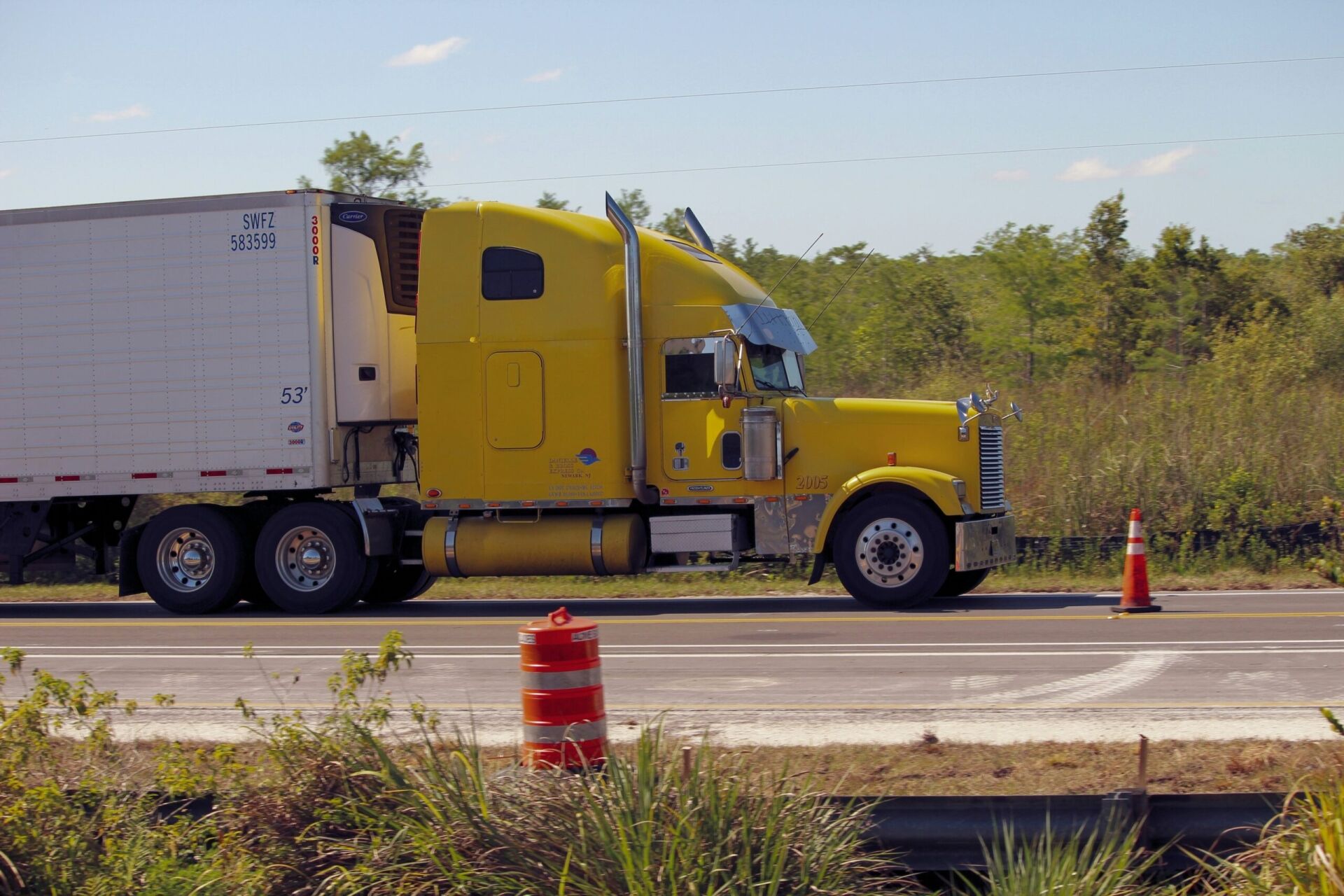
A commercial truck accident is not a fender bender with a regular driver. On the other side of your claim is a trucking company backed by corporate insurers, in-house legal teams and defense attorneys who have handled hundreds of cases just like yours. They know the playbook. They started running it before you left the emergency room.
Trucking companies and their insurers treat every accident as a financial threat. Their goal is simple: pay you as little as possible or avoid paying you at all. They do this through a set of well-rehearsed trucking company liability tactics Florida victims rarely see coming.
Understanding these tactics is the first step toward protecting your claim. What follows is the opposition's playbook, drawn from years of handling truck accident cases across Florida.
Rapid Response Teams: What Happens Before You Even Leave the Hospital
Most people do not realize that major trucking companies have rapid response protocols that activate within hours of an accident. Some carriers have teams on the road within 60 minutes.
These are not rescue crews. They are damage-control teams. Their job is to get to the accident scene before evidence disappears and, more importantly, before you have a chance to hire a lawyer.
Rapid response teams typically include an insurance adjuster, a company investigator and sometimes a defense attorney. They photograph the scene from the trucking company's perspective. They interview witnesses while memories are fresh, often framing questions to support the company's version of events. They may approach you at the hospital with a sympathetic tone, asking you to give a recorded statement or sign a release.
Everything they collect is designed to build the company's defense. Nothing they gather is meant to help you. This is why a truck accident investigation Florida families can trust requires independent legal action from the very beginning.
Destroying or Hiding Critical Evidence
This is one of the most aggressive trucking company defense strategies, and it happens more often than the public realizes.
Commercial trucks generate enormous amounts of data. Electronic logging devices (ELDs) record hours of service. Engine control modules (ECMs) store speed, braking and acceleration data from the moments before a crash. Dashcam footage captures what actually happened. Maintenance logs reveal whether brakes, tires and other critical systems were properly serviced. Driver qualification files show whether the driver should have been behind the wheel at all.
All of this evidence can prove liability. And all of it is controlled by the trucking company.
Under FMCSA regulations, carriers are required to retain certain records. But "required" and "actually preserved" are two different things. ELD data can be overwritten. Dashcam footage gets "lost." Maintenance records are incomplete. Driver files go missing.
Florida courts take truck accident evidence destruction seriously. The spoliation of evidence doctrine allows judges to instruct juries that destroyed evidence should be presumed unfavorable to the party that destroyed it. In some cases, sanctions or adverse inference instructions can dramatically shift the outcome of a trial.
But spoliation remedies only work if you act quickly. Once evidence is gone, proving it existed at all becomes an uphill battle. An experienced attorney can send a spoliation letter demanding preservation of all records within days of the crash, putting the trucking company on legal notice.
Blaming the Victim: Shifting Fault Under Florida's Comparative Negligence Law
If a trucking company cannot make the evidence disappear, their next move is to make the accident your fault.
Florida's HB 837, signed into law in 2023, changed the stakes dramatically. Under the modified comparative negligence system, if you are found 51% or more at fault for the accident, you recover nothing. Not a reduced amount. Nothing.
Trucking companies and their insurers know this threshold inside and out. Their entire defense strategy often revolves around inflating your percentage of fault to push you past that 51% bar.
They will claim you were speeding, even by a few miles per hour. They will argue you failed to check your mirrors or that you were distracted by your phone. They will pull your driving history looking for prior tickets. They will scrutinize dashcam or traffic camera footage frame by frame, searching for any moment where your driving was less than perfect.
This is how trucking companies fight claims in Florida. They do not need to prove the truck driver was blameless. They just need to convince a jury that you were slightly more responsible than their driver. That is all it takes under the current law.
Using Independent Medical Examinations to Minimize Your Injuries
Do not let the word "independent" fool you. An independent medical examination (IME) is requested and paid for by the trucking company's insurer. The doctor conducting the examination works regularly with that insurer. The outcome is rarely a surprise.
IME doctors are brought in to challenge the severity of your injuries, question whether your injuries were actually caused by the truck accident or suggest that you have reached maximum medical improvement sooner than your own treating physicians believe.
Their reports often downplay herniated discs as "preexisting degenerative changes." They characterize traumatic brain injuries as "mild" or "resolved." They suggest that your ongoing pain is unrelated to the crash.
These reports become powerful tools in settlement negotiations and at trial. When the trucking company's insurer points to a doctor's report saying your injuries are minor, it gives them justification to reduce the value of your claim by tens or even hundreds of thousands of dollars.
Your attorney can challenge IME findings by obtaining the doctor's testimony history, showing how often they testify for insurance companies and comparing their conclusions with the opinions of your actual treating physicians.
Pressuring Quick Settlements Before You Understand Your Injuries
A fast settlement offer after a serious truck accident should raise a red flag, not provide relief.
Trucking company insurers know that accident victims face immediate financial pressure. Medical bills start arriving. You may be unable to work. Rent and mortgage payments do not stop because you were hit by an 80,000-pound truck.
This is the environment in which they offer you a check. The amount may sound significant in the moment, but it almost always falls far short of covering your actual losses.
They want you to settle before you reach maximum medical improvement (MMI), which is the point at which your doctors determine that your condition has stabilized. Until you reach MMI, the full scope of your injuries, including future surgeries, ongoing therapy and permanent limitations, remains unknown.
Accepting a settlement before MMI means you are signing away your right to compensation for injuries you have not yet fully discovered. Florida's two-year statute of limitations under Florida Statute 95.11 gives you time, but the trucking company's strategy is to make you feel like you do not have that time.
Hiding Behind Multiple Corporate Entities
The trucking industry is built on layers of corporate separation. This is not accidental. It is a liability shield.
A single truck on the highway may involve half a dozen different entities: the driver, the motor carrier, a leasing company that owns the trailer, a freight broker that arranged the load, a maintenance contractor and a parent corporation that controls all of them.
When an accident happens, each entity points the finger at the others. The motor carrier claims the driver was an independent contractor, not an employee. The broker argues it had no control over the carrier's operations. The leasing company says maintenance was someone else's responsibility.
This shell game is one of the most effective trucking company defense strategies because it forces the victim to untangle a web of corporate relationships before they can even identify who to sue. Without an attorney who understands how to investigate trucking company structures, FMCSA filings and operating authority records, legitimate claims can stall or collapse.
Florida law and federal regulations provide tools to cut through these layers. The FMCSA's statutory employee doctrine, operating authority records and insurance filings can reveal the true relationships between entities and establish who actually controlled the driver and the truck.
Delaying the Claims Process to Create Financial Pressure
Time is not neutral in a truck accident claim. It is a weapon, and trucking companies know how to use it.
Intentional delays are a core component of how trucking companies fight claims. They request extensions. They claim they need additional documentation. They dispute medical records. They change adjusters mid-claim, forcing you to start explanations over again.
Every month that passes without a resolution is another month of bills piling up, another month of financial stress and another month of pressure to accept whatever they eventually offer.
This strategy is especially effective against unrepresented victims. Without a lawyer pushing deadlines and threatening litigation, there is no consequence for delay. The trucking company's insurer earns interest on the money it is holding while you fall further behind.
Florida's bad faith insurance laws provide a counterweight. If an insurer unreasonably delays or denies a valid claim, it may be exposed to a bad faith action that carries damages beyond the original claim value. But invoking these protections requires legal knowledge and a willingness to litigate.
How to Protect Your Case Against These Tactics
Trucking company liability tactics Florida accident victims face are sophisticated, but they are not unbeatable. Here is what you can do to protect yourself.
Hire an attorney before you speak to anyone from the trucking company or its insurer. The first 72 hours after a truck accident are critical. A lawyer can send preservation letters, begin an independent investigation and prevent you from making statements that damage your case.
Do not give a recorded statement. You are not legally required to give one to the trucking company's insurer. Anything you say will be used to shift fault or minimize your injuries.
Preserve your own evidence. Photograph the scene if you are able. Save all medical records, bills and correspondence. Keep a journal documenting your pain, limitations and emotional impact.
Do not accept an early settlement offer. Wait until your doctors have determined your full prognosis. Understand the complete value of your claim before you negotiate.
Document everything. Every conversation with an insurance adjuster, every medical appointment, every day of missed work. Detailed records make it harder for the defense to manufacture a narrative.
Understand the timeline. Florida Statute 95.11 gives you two years from the date of the accident to file a lawsuit. Do not let the trucking company's delay tactics eat into that window.
Frequently Asked Questions
What is a trucking company rapid response team?
A trucking company rapid response team is a group of investigators, adjusters and sometimes attorneys deployed to the accident scene within hours of a crash. Their purpose is to collect evidence and build the company's defense before the victim has legal representation. They are not there to help you.
Can a trucking company destroy evidence after an accident?
Trucking companies are required under FMCSA regulations to retain ELD data, maintenance logs and driver qualification files. However, evidence destruction does occur. Florida's spoliation of evidence doctrine allows courts to penalize parties that destroy or hide relevant records, including adverse inference instructions at trial.
How does Florida's 51% rule affect my truck accident case?
Under HB 837 (2023), Florida follows a modified comparative negligence standard. If you are found 51% or more at fault for the accident, you are barred from recovering any compensation. Trucking companies exploit this rule by inflating your percentage of fault through aggressive investigation and testimony.
Should I accept a quick settlement offer from a trucking company's insurer?
No. Early settlement offers are almost always designed to close your claim before the full extent of your injuries is known. You should wait until you reach maximum medical improvement (MMI) so your attorney can calculate the true value of your claim, including future medical costs and lost earning capacity.
Why do trucking companies use so many corporate entities?
Trucking companies create layers of corporate separation to limit liability exposure. By using separate entities for driving, leasing, brokering and maintenance, they make it difficult for accident victims to identify the responsible party. An attorney experienced in truck accident cases can use FMCSA records and corporate filings to trace liability to the correct entities.
Protect Your Claim. Talk to an Attorney Who Knows Their Tactics.
Trucking companies start building their defense the moment an accident happens. You deserve someone building your case just as aggressively.
At Mausner Group Injury Lawyers, we have seen every tactic on this list. As former prosecutors, we know how to investigate, how to preserve evidence and how to hold trucking companies accountable when they try to avoid responsibility.
Fierce Advocates. Former Prosecutors.
Call 305-344-4878 or visit mginjuryfirm.com/ for a Free Case Review. There is no fee unless we recover for you.
About the Author
Eric Mausner is the Founder of Mausner Group Injury Lawyers. A former prosecutor and graduate of George Washington University and New York Law School, Eric has dedicated his career to representing individuals and families harmed by negligence. He leads the firm's trucking accident practice and is committed to holding negligent carriers and their insurers accountable.
The information in this article is for general educational purposes only and does not constitute legal advice. Every truck accident case is different, and results depend on the specific facts and circumstances involved. Reading this article does not create an attorney-client relationship with Mausner Group Injury Lawyers. If you have been injured in a truck accident, contact a qualified attorney to discuss your individual situation.
600+ 5-Star Google Reviews
Last Updated Friday, May 8th, 2026
