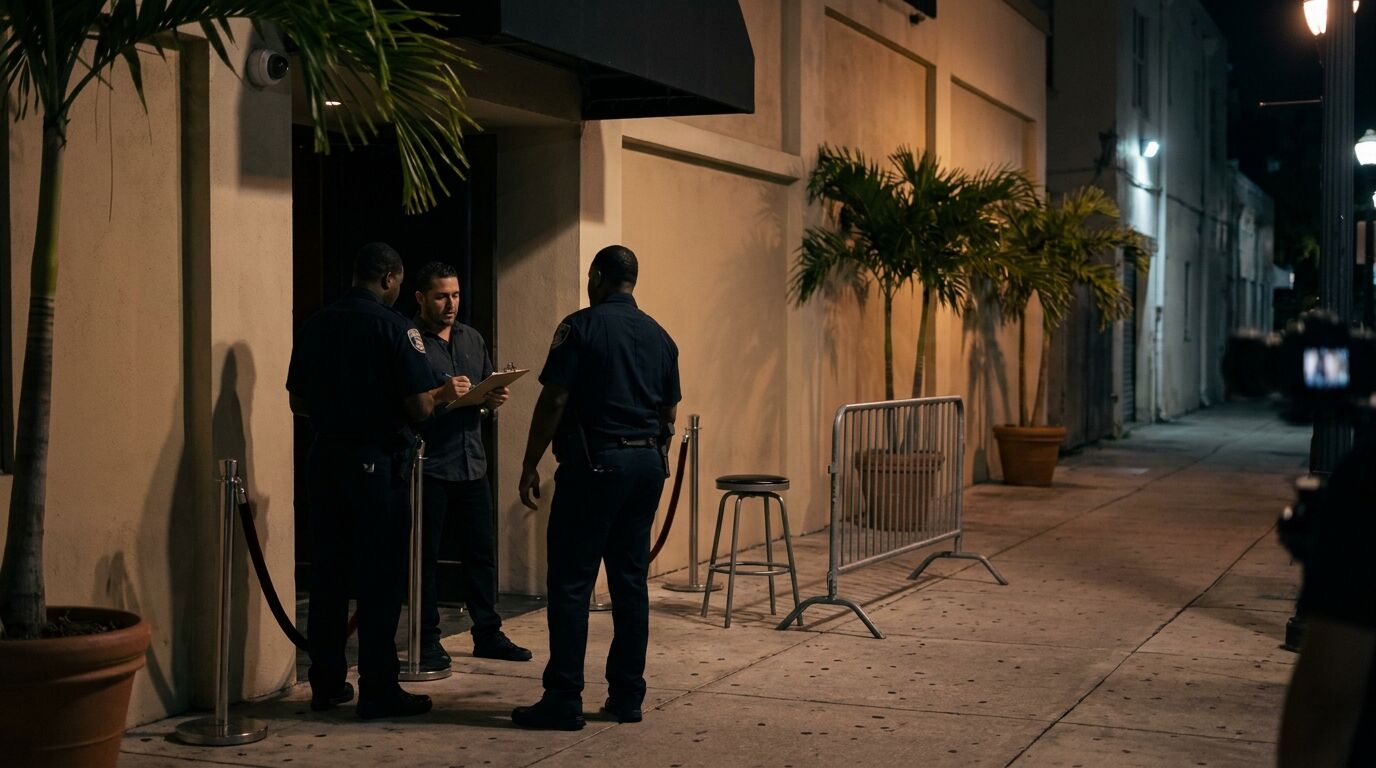
When a night out in Miami ends with an assault, the person who threw the punch is rarely the only one responsible. Bars and nightclubs profit from packing crowds, serving alcohol, and keeping the energy high, and Florida law requires them to manage the risks that business model predictably creates. A venue that understaffed security, ignored a brewing confrontation, or kept serving someone long past the point of danger can be held liable for the injuries that follow.
These cases matter because the attacker usually cannot pay for what they did, and often is never even identified in a chaotic club. The venue can. It carries insurance, it controlled the environment, and its choices about security and service are what allowed a preventable assault to happen.
This article covers how venue liability works in Miami's bar and club scene, from South Beach to Wynwood and Brickell, including security failures, bouncer violence, and Florida's narrow, but real alcohol liability law. If you were assaulted at a bar, club, or lounge anywhere in South Florida, the Miami negligent security lawyers at Mausner Group Injury Lawyers offer free, confidential consultations at 305-344-4878.
The Venue's Duty to Its Patrons
A bar or nightclub owes its customers reasonable protection from foreseeable harm, and no business has an easier time foreseeing violence than one that combines alcohol, crowds, late hours, and door lines. As we explained in our guide to foreseeability in negligent security cases, prior incidents at and around a venue build the legal case that management knew what its property attracted.
For nightlife venues, the foreseeability bar is low and the industry standards are well developed. What reasonable security looks like is not a mystery:
- Enough trained security staff for the crowd size, positioned where problems start: the door, the bar, the dance floor, the bathrooms, the parking area
- ID and capacity control at the door, including turning away visibly intoxicated or aggressive patrons
- Intervention protocols when a confrontation begins, because most club assaults are preceded by minutes of visible escalation staff should have interrupted
- Adequate lighting and camera coverage, inside and out
- Coordination with off-duty police details, which many Miami venues hire for exactly this reason
A venue that cut these corners to save money, and many do, owns the consequences.
When the Security Is the Problem
A separate category of case involves the venue's own staff: bouncers and security guards who use far more force than the situation allowed. Ejecting a patron does not license a beating in the alley, and Florida venues are responsible when the people they hired and trained, or failed to train, injure the customers they were supposed to protect.
These cases can be stronger than third-party assault claims, because the attacker was the venue's own agent. Key questions include how the guard was screened and trained, whether the venue knew about prior complaints against them, and whether the security contractor carries its own coverage. When a venue hires an unlicensed or inadequately screened security company, both the venue and the contractor may share liability.
The Overservice Question: Florida's Dram Shop Law
Florida's alcohol liability statute, Section 768.125, is one of the narrowest in the country. A bar generally is not liable for injuries caused by an intoxicated adult it served. The two exceptions matter, though: a venue that serves alcohol to a minor, or that knowingly serves a person habitually addicted to alcohol, can be held liable for the harm that follows.
In nightlife assault cases, overservice usually plays a supporting role rather than the lead. Serving a visibly hostile, heavily intoxicated patron for hours is evidence of the venue's overall negligence in managing its environment, even where the dram shop statute itself does not apply. And where the aggressor turns out to have been underage in a club that waved them past the ID check, the statute applies with full force.
What Makes Miami Cases Different
The venues themselves shape these cases. South Beach clubs run at enormous capacity with door lines that stretch down Collins and Ocean Drive. Wynwood's bar crawl geography moves intoxicated crowds between venues all night, and assaults often happen in the gray zones between them: sidewalks, parking lots, and alleys the venues claim are not their problem. They often are. A venue's duty can extend to the areas it controls or should control, including the line outside its own door and the lot it directs patrons to use.
The evidence in these cases is also distinctly Miami: promoter records showing expected crowd sizes, staffing rosters showing who was actually working, police off-duty detail records, and camera systems that cover everything, until the footage conveniently cannot be found. A preservation letter in the first days after an assault is the single most important step, because venue footage disappears fast and with it the proof of how long staff watched the problem build.
What Victims Can Recover
Assault victims can recover for medical care, including reconstructive surgery and dental work common in these cases, lost income, therapy and trauma treatment, and pain and suffering. Under current Florida law, a jury may assign a share of fault to the attacker, which is why these cases are built to prove the venue's own failures with specificity: the missing guard, the ignored warning signs, the corner-cut security budget. Severe cases involving brain injuries from falls or beatings become the lifetime-damages cases we describe on our catastrophic injury page.
Florida's two-year deadline, covered in our statute of limitations guide, applies. The venue's footage and staffing records last weeks at best.
Frequently Asked Questions About Bar and Nightclub Assaults
Can I sue a nightclub if I was assaulted there?
Often, yes. Venues owe patrons reasonable protection from foreseeable violence, and a club that understaffed security, ignored escalating behavior, or failed to control its door can be held liable for an assault by another patron. The claim targets the venue's own security failures, not just the attacker.
Can I sue if a bouncer injured me?
Yes. Security staff may use only reasonable force, and a bouncer who beats or body-slams a patron exposes the venue and often its security contractor to liability. Screening, training, and prior complaints about the guard become central evidence.
Is a bar liable for overserving someone who attacked me?
Only narrowly under Florida's dram shop law, Section 768.125, which applies when a venue serves a minor or someone known to be habitually addicted to alcohol. Overservice can still support the broader negligence case by showing the venue failed to manage an obviously dangerous patron.
What if the assault happened outside the club?
The venue's responsibility can extend to areas it controls, including its entrance line, sidewalk queue, and the parking areas it directs patrons to. Assaults in these zones are evaluated on the venue's control and the foreseeability of violence there, and many strong cases arise just outside the door.
What should I do after being assaulted at a bar or club?
Get medical care immediately, report the assault to police, and preserve everything: photos of injuries, names of witnesses, and the clothing you wore. Then, get a preservation letter to the venue quickly, because interior and exterior camera footage is routinely overwritten within days.
What if the person who attacked me was never caught?
You may still have a case. Venue liability does not depend on identifying or convicting the attacker. The claim rests on the venue's own security failures, and its insurance is the realistic source of compensation in most nightlife assault cases.
Assaulted at a Miami Venue? Get Answers
The club had cameras, staff, and a security plan on paper. You are entitled to find out what actually happened to all three. Eric J. Mausner spent years prosecuting violent crime, and Mausner Group Injury Lawyers brings that experience to holding Miami venues accountable for the nights they failed to manage.
Call 305-344-4878 for a free, confidential consultation, available 24/7. You pay nothing unless we win.
This article is for general informational purposes only and does not constitute legal advice. Florida law referenced includes Fla. Stat. 768.125, 768.0706, and 95.11. Laws change; consult a licensed Florida attorney for advice specific to your situation.
