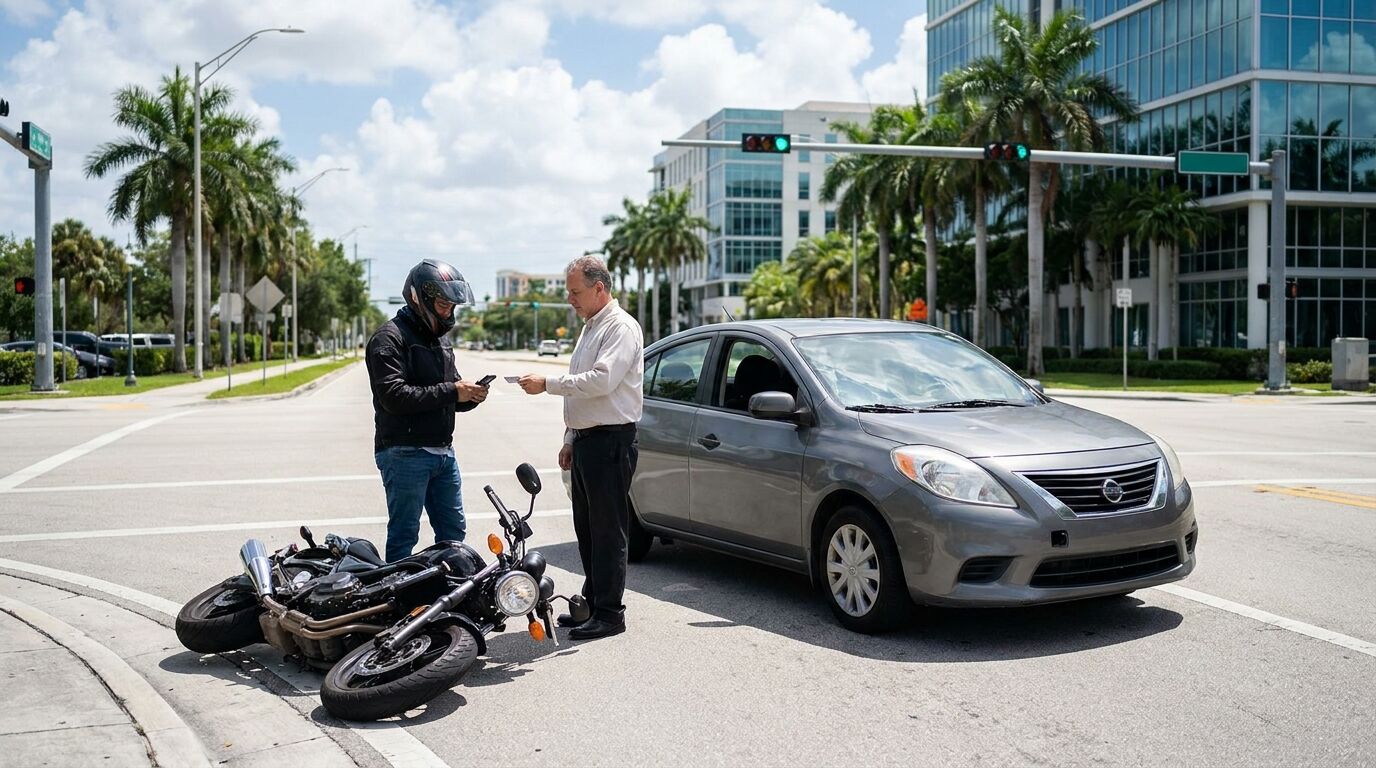
La mayoría de los accidentes de motocicleta en Miami son causados por otros conductores, no por los ciclistas. El accidente más grave es cuando un conductor gira a la izquierda cruzando el camino de una motocicleta, seguido de cerca por colisiones por cambio de carril, conducción distraída y conductores que simplemente no ven a un ciclista que debería haber sido visto.
Florida registra constantemente más muertes de motociclistas que cualquier otro estado del país, unas 600 personas al año, y la combinación de tráfico intenso, temporada de ciclismo durante todo el año y conductores turísticos en el sur de Florida sitúa a Miami-Dade en el centro de esa estadística.
Este artículo cubre los patrones de accidentes que realmente llevan a los ciclistas de Miami al hospital, las carreteras locales donde ocurren y las realidades legales que todos los ciclistas de Florida deberían conocer antes de sufrir un accidente, comenzando por el hecho de que la póliza de responsabilidad civil (PIP) no cubre a los ciclistas. Si usted o un familiar ha resultado herido al pedalear, Abogados de accidentes de motocicleta en Miami En Mausner Group Injury Lawyers ofrecemos consultas gratuitas en 305-344-4878.
El accidente en la curva a la izquierda: el que mata a los ciclistas
El escenario más mortal en el mundo de la motocicleta apenas implica a la moto. Un conductor que espera para girar a la izquierda mira hacia abajo por la carretera, no ve ningún coche y gira directamente por la vía del corredor contrario. El corredor tiene un segundo o dos y no tiene dónde ir.
En estos casos, los conductores casi siempre dicen lo mismo: "Nunca lo vi". La explicación humana es real: el perfil estrecho de una motocicleta es más difícil de detectar que el de un coche, pero la respuesta legal es que no ver lo que está claramente visible es negligencia, no una excusa. El ciclista que viene en sentido contrario tiene derecho de paso, y el conductor que gira debe cederle el paso.
Cambios de carril y puntos ciegos
Las autopistas de Miami son un constante cambio de carril, y una motocicleta cabe perfectamente dentro del punto ciego de un SUV. Los conductores que adelantan o adelantan a través de carriles en la I-95, la Palmetto o la Dolphin sin comprobar bien la visibilidad, son responsables de una gran parte de las lesiones graves sufridas por los ciclistas. La posición del ciclista en el carril, el equipamiento visible y el uso del faro ayudan en parte, pero nada de esto libera al conductor de la obligación de comprobar antes de desplazarse.
Conductores distraídos e incapacitados
Un conductor que mira por el teléfono recorre toda una cancha de fútbol a velocidad de carretera. Los conductores pagan por esos miradas más que cualquier otro en la carretera, porque cuando ocurre el despiste no hay metal alrededor.
Miami añade su propia versión del problema de la conducción bajo los efectos del alcohol: una economía del ocio nocturno que coloca a los conductores ebrios en las carreteras y los corredores del centro de la ciudad exactamente en las horas en que los pasajeros se dirigen a casa. El alcohol aparece en las estadísticas de accidentes de motocicleta en ambos lados, pero un ciclista sobrio que resulta herido por un conductor ebrio es una de las imágenes más claras de responsabilidad en el derecho de lesiones.
Velocidad, distancia de seguimiento y el problema de la parte trasera
Un coche que choca contra otro produce metal doblado. Un coche que choca contra una motocicleta en un semáforo arroja a un ser humano contra el pavimento. La maniobra de adelantamiento, los diferenciales de velocidad y las paradas repentinas en tráfico con tráfico intenso en la US-1 o la Biscayne Boulevard provocan choques de tipo rear-end y intersección que son menores para los conductores y catastróficos para los pasajeros.
Condiciones de la carretera y la estación de lluvias
Lo que un automóvil ignora, un moto no puede: el grava en una curva, el pavimento irregular de la construcción interminable, las chapas de acero y la película resbaladiza que las tormentas de tarde de Florida del Sur dejan en los primeros minutos de la lluvia. Los moteros aquí montan durante doce meses del año, lo cual es una bendición para el hobby y un multiplicador de exposición. En aquellos casos en que el diseño o el mantenimiento de una vía pública influyen, reclamación puede involucrarse a un acusado gubernamental, con las normas especiales de aviso que se derivan de ello.
Dónde se lesionan los Miami Riders
Los mismos corredores aparecen en los datos de accidentes año tras año: la US-1 desde Coral Gables hasta los Keys, el tramo largo de Biscayne Boulevard con mucha señalización, las vías peatonales, incluida la Rickenbacker con tráfico de ciclistas y motociclistas, la Okeechobee Road, y los cruces de las carreteras I-95 y Palmetto. Las velocidades altas, los cruces densos y la constante mezcla de vehículos son los puntos comunes.
Las realidades jurídicas que todos los corredores de Florida deberían conocer
Hay tres cosas que hacen que claimlas motocicletas sean diferentes de claimlos automóviles en Florida:
- El PIP no cubre a los motociclistas. El sistema de no responsabilidad civil de Florida, que hemos explicado en nuestro guía sobre PIP, Esto excluye completamente a los pasajeros. Los gastos médicos se pagan mediante la cobertura del seguro médico y de los pagos médicos, así como la cobertura de lesiones corporales del conductor responsable.
- La cobertura para conductores no asegurados es la salvación de un conductor. Dado que las tasas de conductores no asegurados en Florida son algunas de las más altas del país, la cobertura de UM en tu póliza individual suele ser lo que realmente paga una indemnización importante reclamación. Los conductores deberían tener la cobertura que puedan pagar.
- La parcialidad es parte del asunto. Las aseguradoras se apoyan en el estereotipo del motociclista imprudente para atribuir la culpa a los conductores, y según las negligencia comparativa normas de Florida, si un conductor es considerado responsable de más del 50 por ciento de los daños, no recibirá ninguna indemnización. Enfrentar esa parcialidad con pruebas físicas, testimonios de la evidencia testigos y reconstrucciones es una parte fundamental de cómo se ganan estos casos.
La elección del casco también influye en claimla edad mínima para los motociclistas mayores de 21 años, un tema que requiere un análisis más detallado, por lo que cubriremos la ley de casco de Florida de forma separada.
Qué hacer después de un accidente de motocicleta
Los detalles son más importantes para los conductores porque las lesiones son más graves y la discriminación es real: reciba atención médica de inmediato, fotomele todo si puede, obtenga los datos de los testigos, no entregue una declaración grabada a la aseguradora del otro conductor y conserve la moto en su estado original en lugar de repararla. Luego, determine qué ha ocurrido reclamación realmente antes de aceptar cualquier versión de lo que sucedió. Página de prácticas sobre accidentes de motocicleta en Miami explica cómo construimos estos casos.
Preguntas frecuentes sobre los accidentes de motocicleta en Miami
¿Cuál es la causa más común de accidentes de motocicleta en Miami?
Los conductores que hacen giras a la izquierda cruzando el camino de una motocicleta que se acerca provocan la mayor parte de los accidentes de motocicleta mortales o graves, seguidos de cambios de carril inseguros y conducción distraída. En la mayoría de los accidentes graves, el otro conductor, y no el ciclista, es el responsable.
¿La cobertura del seguro PIP cubre a los motociclistas en Florida?
No. El sistema de indemnización por daños personales sin culpa de Florida excluye completamente a los motociclistas, por lo que los gastos médicos del conductor se cubren mediante la cobertura de seguros de salud, la cobertura de pagos médicos opcionales y claimcontra el conductor responsable. Esta exclusión es la diferencia estructural más importante entre el seguro de motocicleta y el de automóviles accidente automovilístico claim.
¿Puedo reclamar una indemnización si el conductor dice que nunca me vio?
Sí. "Nunca vi la motocicleta" es una admisión, no una defensa. Los conductores tienen el deber legal de ver lo que está claramente visible y de ceder el paso, y no observar a un ciclista es en sí mismo negligencia.
¿Qué pasa si la compañía de seguros me culpa del accidente?
Las aseguradoras recurren a menudo a estereotipos sobre los conductores para atribuir la culpa. Bajo las negligencia comparativa normas de Florida, el conductor que tenga más del 50 por ciento de culpa no recuperará nada; por eso estas disputas sobre la culpa son tan agresivas y por eso la importancia que tienen tanto el daño físico la evidencia como la reconstrucción.
¿Es realmente Florida el estado más peligroso para los motociclistas?
Florida regularmente lidera el país en muertes de motociclistas, con aproximadamente 600 fallecimientos cada año según los datos estadísticos de accidentes. La temporada de conducción durante todo el año, el intenso tráfico y el alto volumen de turistas que viajan a la zona contribuyen a esto, y el sur de la Florida representa una proporción significativa de estos casos.
¿Cuánto tiempo tengo que presentar una demanda por accidente de motocicleta en Florida?
Dos años a partir de la fecha del accidente plazo de prescripción, según la norma de Florida tras la Ley 837, el mismo plazo se aplica a car accidentla hora de presentar la denuncia. El plazo práctico es mucho más corto, ya que la disponibilidad de testigos la evidencia y víctimas desaparece rápidamente.
Consulte a un abogado especializado en accidentes de motocicleta en Miami
Los conductores se encuentran reclamación en una situación desventajosa desde el primer momento en que un ajustador oye la palabra “motocicleta”. Mausner Group Injury Lawyers construye sus casos sobre lesiones de conductores, la evidencia y su socio fundador, Eric J. Mausner, aplica un enfoque de fiscal que busca demostrar exactamente lo que el conductor no pudo ver.
Llamar 305-344-4878 Para una consulta gratuita, disponible las 24 horas del día, los 7 días de la semana. No pagas nada a menos que gane nuestro equipo.
Este artículo tiene como único propósito informar a los lectores y no constituye un asesoramiento legal. Los términos legales mencionados en este artículo incluyen la Ley de Florida 627.736, 316.211 y 95.11, así como los datos de accidentes del FLHSMV. Las leyes pueden cambiar; consulte a un abogado con licencia en Florida para obtener asesoramiento específico para su situación.
