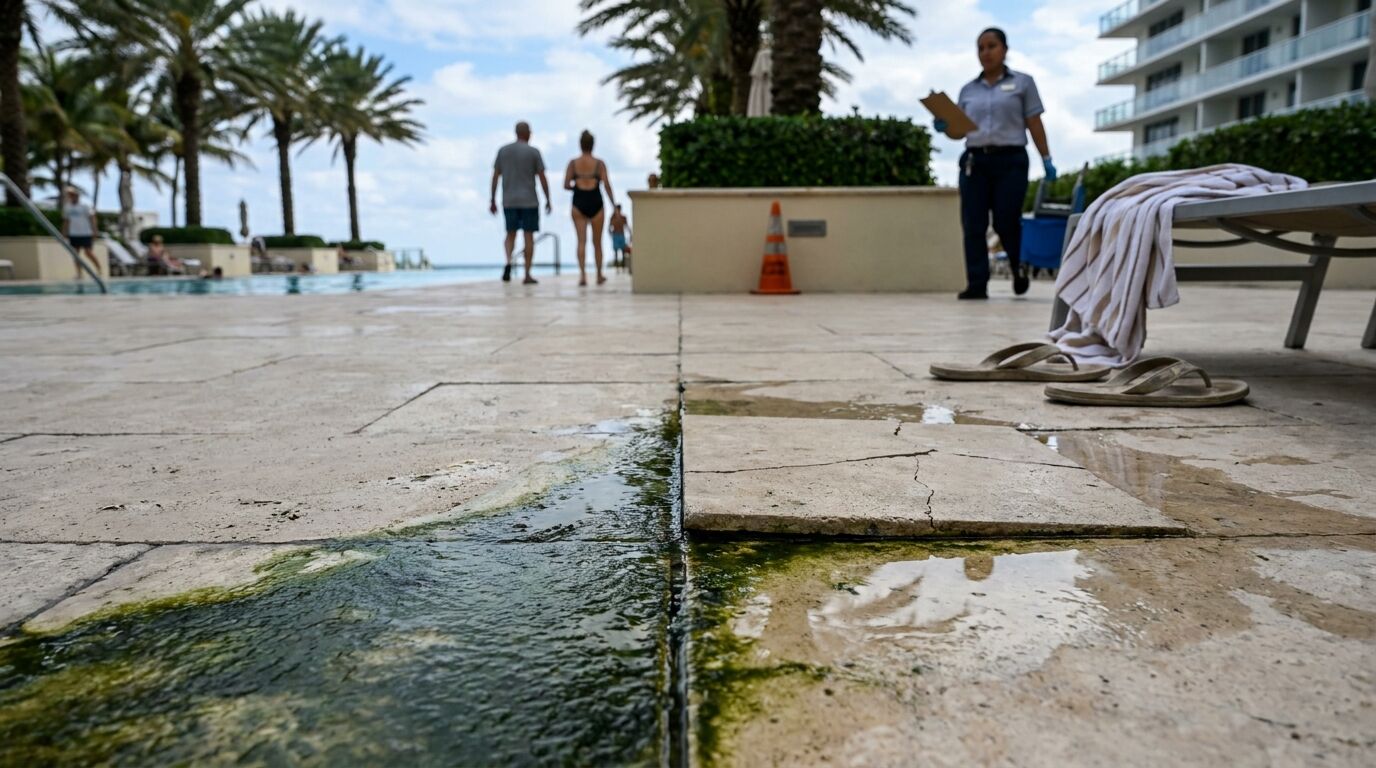
Miami Beach hotels sell a specific fantasy: marble lobbies, infinity-edge pool decks, oceanfront walkways, and a drink in your hand on the way to all of them. Every element of that fantasy is also a slip hazard, and the hotels know it, because they mop, polish, and rebuild these surfaces every day of the year. When a guest goes down on a wet lobby floor or an algae-slicked pool deck, the question is never whether the hotel understood the risk. It is what the hotel did about it that day.
Florida law treats hotels differently than a corner store. An innkeeper invites guests to live on the property, around the clock, in swimsuits and sandals and unfamiliar hallways, and courts hold hotels to a duty of reasonable care that reflects that total control over the environment. Hotels answer with corporate claims departments, risk managers on speed dial, and incident report scripts designed to protect the house. Injured guests, many of them tourists flying home in days, routinely get outmaneuvered before they understand they have a case.
This article explains how hotel fall claims work in Miami Beach and across South Florida, where the recurring hazards are, and what out-of-state visitors need to know about bringing a Florida claim from home. If you were hurt at a hotel or resort anywhere in the area, the premises liability lawyers at Mausner Group Injury Lawyers offer free consultations at 305-344-4878.
The Innkeeper's Duty Runs High
A registered guest is the law's classic invitee, owed the full package of premises duties: reasonable inspection for hazards, correction or warning within a reasonable time, and maintenance of the property in reasonably safe condition. Courts have long described an innkeeper's obligation toward guests in demanding terms, and for good reason. The guest controls nothing: not the mopping schedule, not the lighting, not the choice of lobby stone, not whether the pool deck drains properly. The hotel controls all of it and profits from every square foot.
That duty extends across the property: lobbies, hallways, stairwells, pool decks, gyms, spas, restaurants and bars inside the hotel, parking structures, and the walkways between them. It covers hotel-run amenities and, frequently, areas maintained by the hotel's contractors, whose negligence the hotel cannot simply outsource away.
The transitory substance statute we covered in our grocery store guide, Section 768.0755, still governs falls on spilled or tracked liquids, with its actual-or-constructive-knowledge requirement. But hotels face it with a handicap of their own making: their housekeeping logs, inspection schedules, and prior incident reports are detailed, and they document exactly what the hotel knew about its recurring problem areas.
Where Guests Fall in Miami Beach Hotels
The hazards repeat across the Collins Avenue corridor and every resort property south of it:
- Lobby floors. Marble and polished stone are the aesthetic of South Beach, and they are treacherous with the lightest film of tracked rain or spilled drink. Some surfaces fail wet slip-resistance testing outright, the negligent design issue we explained in our wet floor guide.
- Pool decks. Algae films, broken deck tiles, drainage that leaves standing water, and the permanent contradiction of serving cocktails on wet stone. Pool areas produce the worst injuries because falls land on unforgiving surfaces beside hard edges.
- Bathrooms and showers. Missing bath mats, failed grab bars, and tub surfaces worn smooth by years of guests.
- Stairs and transitions. Dim ambient lighting is part of the design language, and unmarked single steps between lobby levels are a recurring defendant.
- Rain season entrances. The daily afternoon storm meets a revolving door and sixty feet of stone, a hazard every Miami Beach hotel can set its watch by.
The Hotel's Playbook After Your Fall
What happens in the hour after a fall at a resort is scripted. Security appears and writes an incident report you will not be given a copy of. You are offered ice, perhaps a room upgrade or a comped meal, with genuine warmth and a risk management purpose. A claims number follows within days, sometimes with a modest settlement offer that arrives before you have seen a doctor at home.
None of this is sinister individually. Collectively, it is a machine for closing claims cheaply, and it works because guests are on vacation, far from their own doctors, and inclined to be polite. The counter-moves are simple: report the fall and insist the report is made, photograph the hazard and the area immediately, including the absence of signage, get names of employees and witnesses, seek medical care that day, and give no recorded statement and sign nothing before advice. Hotel camera coverage is extensive, and the footage of your fall, and of the hour of foot traffic before it, is the case. It is also overwritten quickly, which makes the preservation letter the single most urgent step, exactly as in every fall case we handle.
Out-of-State Guests Can Bring Florida Claims From Home
Most Miami Beach fall victims live somewhere else, and hotels quietly benefit from the assumption that the claim leaves when the guest does. It does not. The claim arises under Florida law where the fall happened; a Florida firm can handle it entirely while you recover at home, and your treatment with your own doctors in your own state slots into the case normally. We walked through the same principle for families in our hotel pool drowning article, and it holds for falls: Distance is logistics, not law.
One more wrinkle for resort guests: Timeshare properties, condo-hotels, and managed residences split control between owners, associations, and management companies, the same defendant-identification question we covered in our wet floor guide. Naming the right entities early matters, and the lease and management agreements answer it.
What a Hotel Fall Claim Is Worth
Falls on stone produce fractures, surgical shoulders and knees, hip injuries in older guests, and head strikes that become the brain injury cases our catastrophic injury page describes. Damages cover medical care at home and in Florida, lost income, and pain and suffering, and the comparative fault fight, usually built on the cocktail you ordered or the sandals you wore, follows the 51 percent bar rules from our comparative negligence guide. Hotels carry substantial liability coverage, and the claims that get paid properly are the documented ones: the footage preserved, the logs obtained, the prior incidents at the same spot discovered. Our slip and fall practice page explains how we build them, and Florida's two-year deadline applies no matter where you live.
Frequently Asked Questions About Hotel Slip and Falls
Can I sue a hotel if I slipped and fell as a guest?
Yes, when the fall traces to the hotel's negligence: a hazard it knew or should have known about, inadequate maintenance, missing warnings, or unsafe surfaces. Hotels owe registered guests the law's highest practical duty of premises care, and their own inspection and incident records often prove what they knew.
What should I do right after falling at a resort?
Report it and insist an incident report is created, photograph the hazard and surrounding area immediately, collect employee and witness names, and get medical care the same day. Do not give recorded statements or sign anything, and get a preservation demand sent for the surveillance footage quickly.
I live out of state. Can I still bring a claim for a fall at a Miami Beach hotel?
Yes. The claim is governed by Florida law because the fall happened here, and a Florida attorney can handle it while you treat with your own doctors at home. Travel is rarely required until late in a case, if at all.
The hotel offered me a comped stay and a quick settlement. Should I take it?
Not before understanding your injuries and your claim's value. Early offers are priced before your medical picture is known, and accepting one releases the claim permanently. A fall that needs surgery months later cannot be reopened.
Who is liable if I fell at a condo-hotel or timeshare resort?
Potentially several entities: the management company, the association, the unit owner, and contractors responsible for the area where you fell. Control is divided by agreements guests never see, which is why these cases start by identifying every responsible party and its insurer.
How long do I have to file a claim for a hotel fall in Florida?
Two years from the date of the fall under Florida's statute of limitations. The surveillance footage and housekeeping logs that prove hotel fall cases disappear far sooner, so the effective deadline for protecting the claim is measured in days and weeks.
Hurt at a Hotel? The House Has a Claims Team. Get Your Own.
The resort documented your fall before you reached the elevator. Match that preparation. Mausner Group Injury Lawyers handles hotel and resort injury claims across Miami Beach, Miami-Dade, and South Florida, for local guests and visitors alike.
Call 305-344-4878 for a free consultation, available 24/7. You pay nothing unless we win.
This article is for general informational purposes only and does not constitute legal advice. Florida law referenced includes Fla. Stat. 768.0755, 768.81, and 95.11, and Florida innkeeper liability case law. Laws change; consult a licensed Florida attorney for advice specific to your situation.
