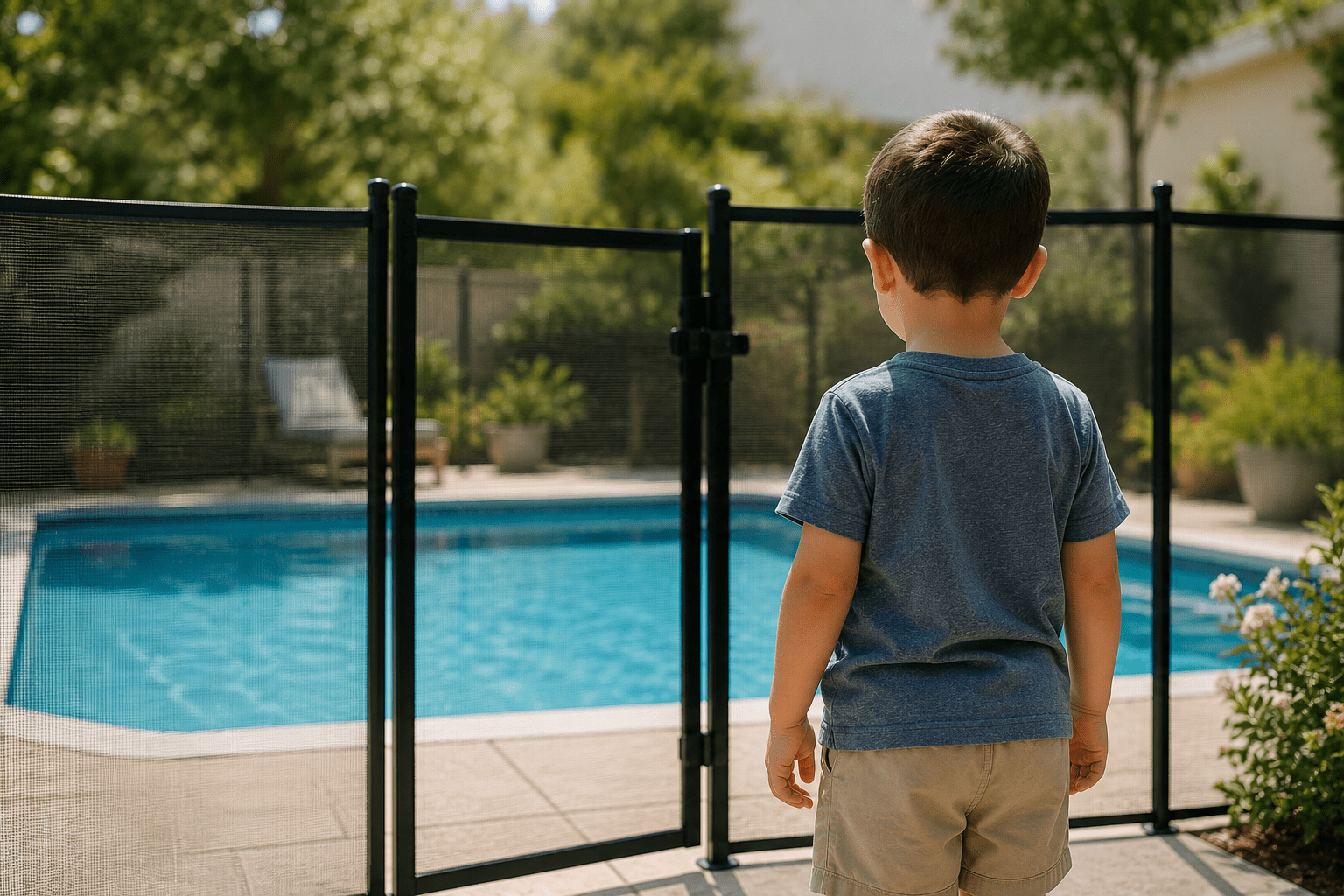
Children with autism spectrum disorder die from drowning at a rate roughly 160 times higher than the general pediatric population. That finding comes from a 2017 study by researchers at Columbia University published in the American Journal of Public Health, and it is one of the most sobering statistics in all of child safety research.
For families in Florida, the risk is compounded by geography. Backyard pools, canals, retention ponds, lakes, and the ocean surround nearly every neighborhood in Miami-Dade, and the Florida Department of Health reports that Florida loses more children under five to drowning than any other state.
This article is written for two audiences. For parents and caregivers, it explains why children with autism are drawn to water and what safety layers actually help. For families who have already lived through a tragedy, it explains what Florida law says about the duties of pool owners, schools, daycares, and property managers, and when a family has legal options. Both halves matter, and we have tried to treat both with the care they deserve.
What the Research Shows
The Columbia study, led by researchers Joseph Guan and Dr. Guohua Li, examined 39 million death records in the United States over a 15-year period. Individuals with an autism diagnosis were about 40 times more likely to die from an unintentional injury than the general population. Among children with autism, drowning was the leading cause of those injury deaths, and the drowning death rate for children with autism was approximately 160 times that of children overall.
Most of those deaths shared a pattern. The child left home or slipped away from supervision, often quietly, and was later found in a nearby body of water. Researchers found the risk peaks in the years after diagnosis, often around ages five through seven, well past the age when parents of neurotypical children stop worrying about wandering.
Why Wandering Leads to Water
Elopement, the clinical term for wandering, is common in autism. A study published in the journal Pediatrics found that nearly half of children with autism had attempted to leave a safe, supervised place at least once. Many of those children are drawn specifically to water. The stillness and sensory qualities of a pool or pond that calm a child in a supervised setting become lethal when the child reaches the water alone.
Two factors make these events harder to prevent than ordinary childhood wandering:
- Children with autism often do not respond to their name being called, which slows searches at the exact moment minutes matter
- Elopement frequently happens at night or during transitions, when a door is unlocked, a gate is open, or a caregiver believes someone else is watching
None of this reflects a failure of parenting. It reflects a known, documented risk profile that safety systems, and the people who control property near water, are supposed to account for.
Florida Law Puts Duties on the People Who Control Water
Florida law does not leave water safety entirely to parents. It places specific obligations on those who own and manage the places where children encounter water.
The Residential Swimming Pool Safety Act, Chapter 515 of the Florida Statutes, requires new residential pools to have at least one safety feature: a barrier meeting the statute's height and gate specifications, an approved pool cover, door and window exit alarms, or self-closing, self-latching devices on doors with direct pool access. A landlord, homeowner, or short-term rental operator whose pool lacks any compliant safety feature is violating the statute.
Beyond Chapter 515, Florida premises liability law imposes duties that matter in these cases:
- Apartment and condo communities must maintain the fences, self-latching gates, and locks that separate children from community pools, lakes, and retention ponds
- Daycares and schools operate under licensing standards and supervision ratios, and a child who wanders away from a facility and reaches water was, by definition, not adequately supervised
- The attractive nuisance doctrine holds owners responsible for artificial water features likely to attract children who cannot appreciate the danger, and courts apply it with special force where the owner knew children frequented the area
Florida law also recognizes that very young children cannot be blamed for their own injuries. A child's diagnosis does not weaken these duties. If anything, when a school, camp, or care facility knew a child had a history of elopement, that knowledge raises what reasonable supervision required.
Safety Layers That Help
Water safety organizations and autism advocacy groups recommend layered protection, because no single measure is reliable on its own:
- Four-sided pool fencing with self-closing, self-latching gates, so the house itself is not one of the barriers
- Door chimes, deadbolts mounted high, and window alarms on every exit that leads toward water
- Swim lessons adapted for children with autism, which several South Florida providers offer, taught with an emphasis on rolling to float and reaching the wall
- Immediate-search protocols that start at the nearest water, since drowning outcomes are decided in minutes
- Notifying trusted neighbors, and alerting them to any pools, canals, or ponds nearby
These steps save lives. They are also, in a legal sense, a map of what reasonable care looks like, for parents and property owners alike.
When a Tragedy Becomes a Legal Case
Not every drowning gives rise to a claim. Some are true accidents no one could have prevented. But many follow a chain of preventable failures: a rental home with no pool barrier, a community gate that had been broken for months, a daycare that lost track of a child it knew would wander, a retention pond with no fence a few hundred feet from a playground.
In those cases, Florida's wrongful death and premises liability laws give a family the right to answers and accountability. A claim can compel maintenance records, staffing logs, and inspection histories that show exactly what was ignored. It can also fund the therapy, care, and stability a grieving family needs, and it is often the only mechanism that forces a property owner to fix the condition before another child finds it.
We wrote about a closely related danger in our guide to retention pond drownings in Florida, and our premises liability practice page explains how these investigations work.
Frequently Asked Questions About Autism and Drowning Risk
How much higher is the drowning risk for children with autism?
Research from Columbia University published in the American Journal of Public Health found that children with autism die from drowning at roughly 160 times the rate of the general pediatric population. Drowning is the leading cause of injury death among children with autism.
Why are children with autism drawn to water?
Many children with autism seek out water for its sensory qualities, its stillness, reflection, and pressure, which can be calming. Combined with elopement, the tendency to wander from supervised settings, that attraction means a child who slips away often heads directly for the nearest pool, pond, or canal.
What does Florida law require for pool safety?
The Residential Swimming Pool Safety Act, Chapter 515, requires residential pools to have at least one approved safety feature, such as a compliant barrier, pool cover, exit alarms, or self-closing and self-latching door devices. Property owners who rent homes with pools must comply, and apartment and condo communities must maintain the gates and fences protecting shared water.
Can a daycare or school be held liable if a child with autism wanders and drowns?
Yes. Daycares and schools have a duty to supervise every child in their care, and that duty accounts for a child's known tendency to wander. When a facility knew of a child's elopement history and the child still reached water unsupervised, the facility's supervision and security can form the basis of a claim.
Does my child's diagnosis affect who is at fault?
No. Florida law holds that very young children cannot be negligent, and a disability does not reduce the duties owed by property owners and caregivers. When a facility or owner knew about elopement risk, that knowledge generally increases what reasonable care was required of them.
What should families look for in adapted swim lessons?
Programs that teach survival skills first, such as rolling onto the back to float and swimming to the wall, with instructors experienced in teaching children with autism. Several South Florida providers offer adapted lessons, and pediatricians and local autism organizations can point families to them.
We Are Here If Your Family Needs Answers
If your child was harmed because a pool had no barrier, a gate did not latch, or a facility failed to supervise, those failures deserve scrutiny. Mausner Group Injury Lawyers handles drowning cases throughout South Florida with the sensitivity they require, and founding partner Eric J. Mausner treats these cases as a personal priority.
Call 305-344-4878 for a free, confidential consultation. There is no fee unless we recover for your family.
This article is for general informational purposes only and does not constitute legal advice. Florida law cited includes Fla. Stat. Chapter 515 and general premises liability principles. Research cited includes Guan & Li, American Journal of Public Health (2017). Laws change; consult a licensed Florida attorney for advice specific to your situation.
