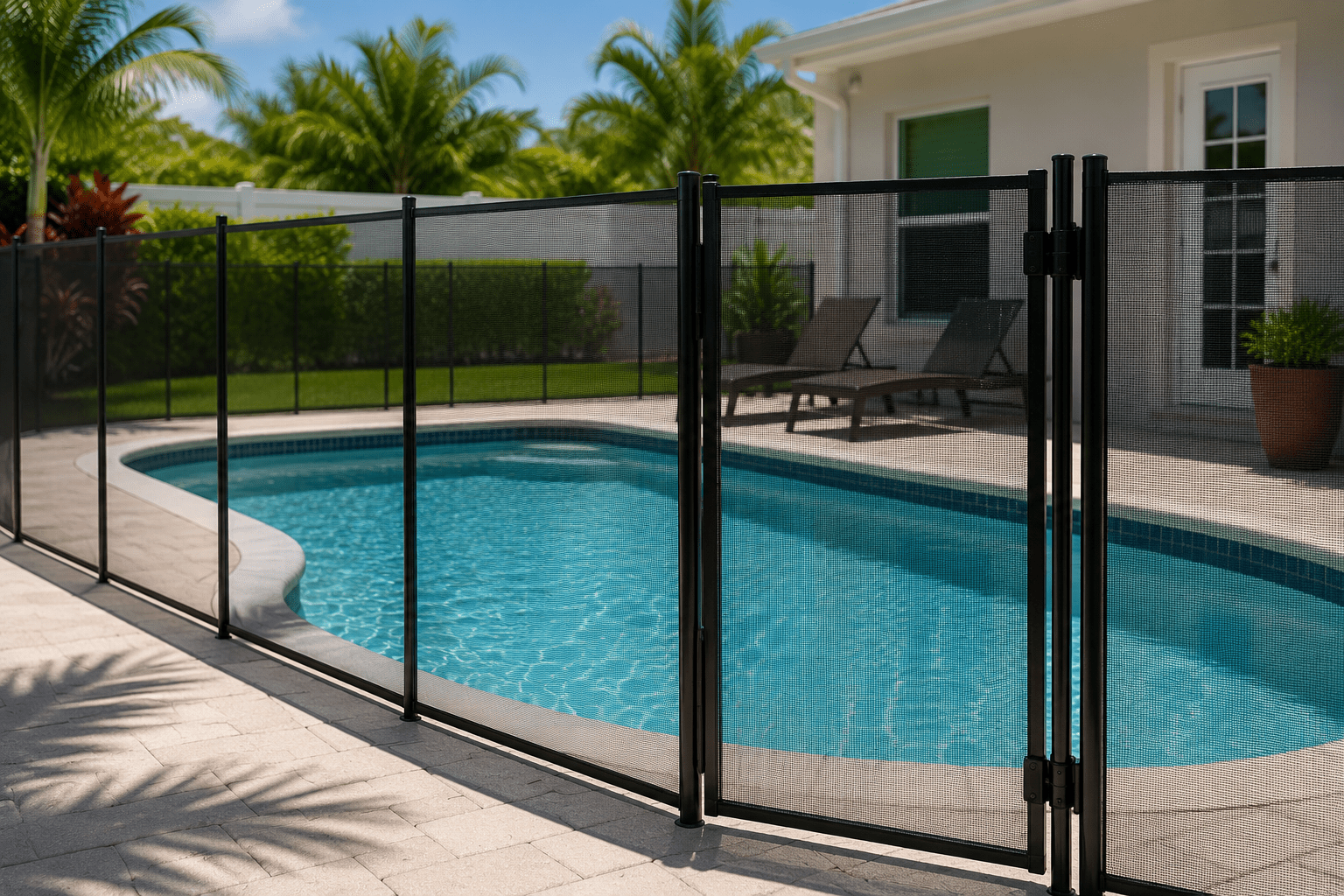
The Florida Residential Swimming Pool Safety Act, Chapter 515 of the Florida Statutes, requires every residential pool built or substantially modified since October 1, 2000, to have at least one approved safety feature: a compliant barrier, an approved safety pool cover, exit alarms on doors and windows with direct pool access, or self-closing, self-latching devices on those doors.
The Legislature passed the Act for a blunt reason. Florida loses more children under five to drowning than any other state, and most of those children drown in residential pools, usually during a brief gap in supervision at a home where nothing stood between the child and the water.
This article explains exactly what Chapter 515 requires, who has to comply, what the penalties are, and what the law means for families after a drowning or near-drowning. It is the legal foundation beneath much of what we have written about water deaths in South Florida, including our guides to retention pond drownings and the elevated drowning risk faced by children with autism. If your family needs answers after a pool tragedy, the Miami premises liability lawyers at Mausner Group Injury Lawyers offer free, confidential consultations at 305-344-4878.
Who and What the Act Covers
Chapter 515 applies to residential swimming pools, spas, and hot tubs deeper than 24 inches at homes, townhomes, and similar residential settings. The compliance obligation attaches when a pool is built or substantially modified, which is why the October 1, 2000, date matters: Pools completed after that date must have at least one safety feature before they pass final inspection.
The Act does not directly govern public and commercial pools, which fall under separate health and building regulations, and it does not reach the man-made ponds we covered in our retention pond article. Its territory is the backyard pool, which is precisely where most young children drown.
The Four Approved Safety Options
An owner satisfies the Act with any one of the following:
- A pool barrier at least four feet high, with no gaps or openings a child could crawl under, squeeze through, or climb over, placed around the pool
- An approved safety pool cover that meets industry standards
- Exit alarms on every door and window in the home that opens directly to the pool area
- Self-closing, self-latching devices on every door with direct access to the pool, with the release mechanism placed out of a small child's reach
What Makes a Barrier Compliant
The barrier option carries its own specifications. The fence must stand apart from the pool's edge far enough that a child who breaches it does not fall directly into the water, it cannot have handholds or footholds that make it climbable, and any access gate must open outward, away from the pool, and close and latch by itself. A four-foot fence with a gate that has been propped open, or a latch that stopped catching a year ago, is not a compliant barrier. It is evidence.
The House Is Not a Barrier
The most misunderstood part of the Act is that the home itself does not count as a fourth wall of protection unless the doors leading to the pool are alarmed or self-latching. Most toddler drownings begin inside the house: a child slips out through an unlocked sliding door while an adult believes they are napping. The Act's door and window requirements exist for exactly that scenario.
What Happens When an Owner Does Not Comply
Violating the Act is a second-degree misdemeanor. The statute gives first-time violators a path to cure the charge by receiving drowning prevention education and bringing the pool into compliance within a set period.
The criminal penalty is modest. The civil significance is not. When a child drowns at a property with a non-compliant pool, the owner's violation of Chapter 515 becomes powerful evidence of negligence. Florida courts allow juries to weigh the violation of a safety statute designed to protect exactly this class of victims, and defense arguments that the child should not have been near the water carry little weight against a law that exists because young children cannot protect themselves.
Landlords, Airbnbs, and the Rental Problem
Chapter 515 compliance does not end when a home changes hands or becomes a rental. A landlord who rents out a house with a pool, or an owner listing a home on Airbnb or Vrbo, is offering a property that must still meet the Act's requirements, and short-term guests with young children often have no idea whether the pool behind their vacation rental has ever been inspected.
South Florida's rental market makes this a recurring source of tragedy. Investor-owned single-family rentals and vacation properties change tenants constantly, gates sag, latches fail, and no one is assigned to notice. When a drowning happens at a rental, the investigation looks hard at what the owner and property manager knew about the pool's condition and when.
What This Means for a Family After a Drowning
A drowning or near-drowning case built on Chapter 515 asks three questions. Was the pool required to comply with the Act? Which safety feature did the owner rely on, if any? And was that feature actually functioning the day the child reached the water?
Answering them means moving quickly: photographing the pool area before the owner repairs the gate, obtaining permit and inspection records, and identifying every party with responsibility for the property's condition. Nothing about that process brings a child back. What it does is establish the truth of what happened, fund the medical care and counseling a family needs, and force a property owner to fix what should have been fixed before. Our premises liability practice page explains how these investigations work.
Frequently Asked Questions About Florida's Pool Safety Act
What does the Florida Residential Swimming Pool Safety Act require?
Every residential pool built or substantially modified since October 1, 2000, must have at least one approved safety feature: a compliant four-foot barrier, an approved safety pool cover, exit alarms on doors and windows with direct pool access, or self-closing, self-latching devices on those doors.
Does Florida law require a fence around every pool?
No. A barrier is one of four options under Chapter 515, and an owner can comply instead with an approved cover, exit alarms, or self-latching door devices. In practice, a compliant fence with a self-closing, self-latching gate is the most reliable of the four.
Do older pools have to comply with Chapter 515?
The Act's requirements attach to pools built or substantially modified after October 1, 2000. Owners of older pools are not required to retrofit under the Act itself, but an unprotected pool can still support a negligence claim under Florida premises liability law, particularly where young children are foreseeable.
Does the Act apply to rental homes and Airbnbs?
Yes. A residential pool does not lose its status because the home is rented. Owners and property managers who offer homes with pools, including short-term vacation rentals, remain responsible for the pool's safety features and their maintenance.
What is the penalty for violating the pool safety act?
Violation is a second-degree misdemeanor, and first-time violators can cure the charge through drowning prevention education and prompt compliance. In a civil case after a drowning, the violation serves as strong evidence of the owner's negligence, which is where the Act carries its real weight.
Can I sue if my child drowned in a pool without a fence?
Potentially, yes. If the pool was required to have a safety feature and did not, or the feature had failed through neglect, Florida law supports a claim against the owner and possibly a property manager or landlord. These cases are fact-intensive and time-sensitive, and an early investigation matters.
Speak With a Miami Premises Liability Lawyer
If your family has suffered a drowning or near-drowning at a pool that should have been protected, you deserve to know exactly what the law required and what was ignored. Mausner Group Injury Lawyers handles drowning cases throughout South Florida, and Eric J. Mausner treats these cases as a personal priority.
Call 305-344-4878 for a free, confidential consultation, available 24 hours a day. There is no fee unless we recover for your family.
This article is for general informational purposes only and does not constitute legal advice. Florida law cited includes Fla. Stat. Chapter 515. Laws change; consult a licensed Florida attorney for advice specific to your situation.
