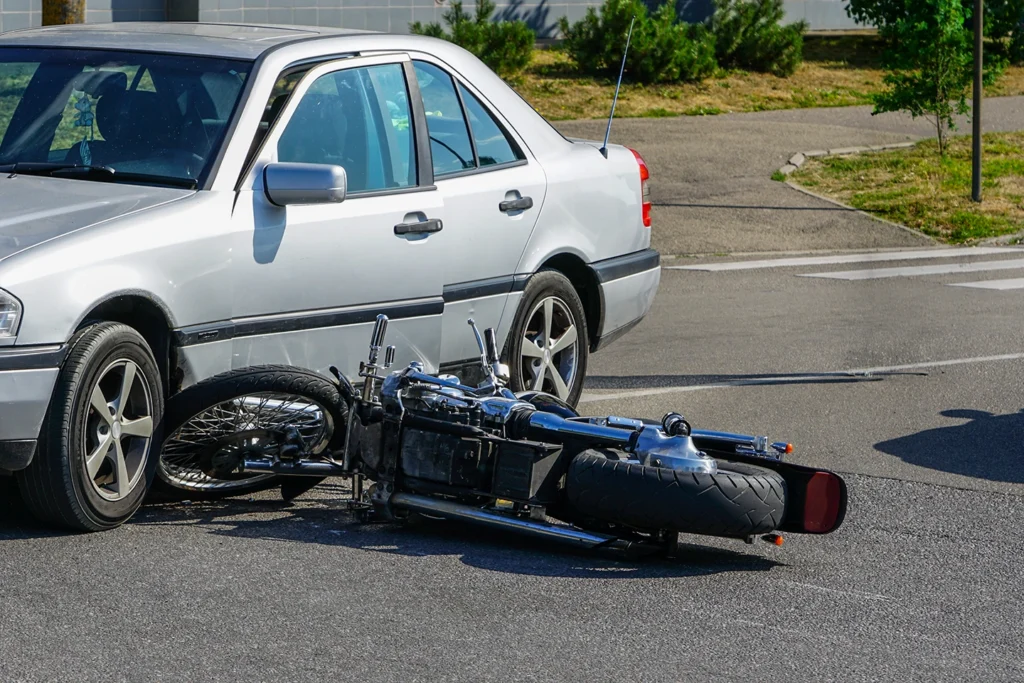
Intersections are where Miami driving goes to get complicated. Six lanes of arterial traffic, permissive green arrows, red-light runners, impatient left-turners gambling on gaps, pedestrians and cyclists crossing on signals that drivers treat as suggestions. It is no accident that intersections produce a huge share of the county's serious crashes, and no surprise that the T-bone collisions they generate, one car's front end into another car's door, produce some of the worst injuries we see, because a door panel offers almost nothing between the striking vehicle and the person inside.
Florida's starting rule is clear: Section 316.122, Florida Statutes, requires a driver turning left to yield the right of way to oncoming traffic that is close enough to be a hazard. When a left-turning driver cuts across an oncoming car's path, the turning driver usually owns the crash. But "usually" does real work in that sentence. Speeding oncoming drivers, red-light runners, blocked sight lines, and malfunctioning signals all redistribute fault, and intersection cases are won on evidence, not assumptions.
This guide covers Florida's right-of-way rules, the exceptions that flip or split fault, and how intersection claims are proven. If you were hurt at an intersection anywhere in South Florida, the abogados de accidentes de auto en Miami En Mausner Group Injury Lawyers ofrecemos consultas gratuitas en 305-344-4878.
Start with the baseline. The left-turning driver yields to oncoming traffic, period, and a turning driver who misjudges a gap has violated a specific statute, the anchor for the fault case, the same way the three-foot law anchors cyclist cases and the door statute anchors dooring claims.
The exceptions are where these cases are actually litigated:
The turning driver yields to traffic that is "so close as to constitute an immediate hazard," a judgment made against how fast traffic should be moving. An oncoming driver doing 65 on a 40 mph arterial compressed the turning driver's decision window and arrives with a share of fault. Proving it takes reconstruction: crush damage, event data recorder speeds, camera timestamps.
A left turn made on a green arrow against a driver who ran the red reverses the usual story entirely. These are the hardest-fought intersection cases, because both drivers swear they had the light, and the tiebreakers are physical: signal timing records, traffic camera and business camera footage, independent witnesses, and where in the intersection the impact happened.
A turning driver whose sight line was blocked, by a stopped truck, an overgrown median, a badly placed sign, may share fault with whoever created the obstruction, and occasionally with the agency that maintains the intersection. Claims against government entities carry their own pre-suit notice requirements and shorter practical timelines, one more reason intersection cases reward early counsel.
Left turns across multiple oncoming lanes fail lane by lane: The first lane stops and waves the turner through, the second lane does not. The "wave" does not transfer the duty to yield, and these courtesy-wave crashes are a recurring Miami pattern, especially at commercial driveways and unsignalized crossings.
The same right-of-way framework governs every intersection movement. Four-way stops run on arrival order and, on ties, yield-to-the-right. Unsignalized intersections put the duty on the driver facing the yield or stop sign. Right turns on red require a complete stop and a clear crossing, and the rolling right that hits a pedestrian in the crosswalk is a fault pattern we covered from the walker's side in our crosswalk guide. Cyclists in the bike lane have full right-of-way protection through intersections, which is exactly where the driver-turning-across-the-lane crashes from our bicycle law guide happen.
Miami's geography concentrates the risk. The wide, fast arterials we profiled in our dangerous roads piece, US-1, Biscayne, the Flagler and Coral Way corridors, the NW avenues, pair high speeds with long signal cycles that reward gambling. Six-point intersections and malfunctioning signals after storms add their own crashes. None of this changes the legal rules, but it changes the evidence available: Busy intersections mean cameras, and cameras mean the fault fight can often be won outright instead of argued.
One version of the left-turn crash deserves its own section, because it kills more riders than any other collision: the driver who turns left across an oncoming motorcycle. The pattern is so common that riders have a name for the explanation that follows, "I never saw him." Motorcycles present a narrow frontal profile, drivers scanning for car-sized objects look straight through them, and the physics are merciless, the rider hits the turning car's fender at full speed with nothing around them.
Legally, these are the same Section 316.122 cases as any left-turn crash, and the turning driver's "I didn't see him" is an admission, not a defense, the duty is to look until you do see. The insurer's counterattack is rider speed, and it gets answered the same way as any speed dispute: reconstruction, data, and cameras. We covered the broader crash patterns in our guide to common causes of motorcycle accidents in Miami, and the left-turn case is the one that makes helmets, and uninsured motorist coverage, the difference between a recovery and a tragedy.
Intersection crashes are two-story cases, both drivers claim the right of way, and the physical evidence picks the winner:
Fault then runs through Florida's comparative negligence system and its 51 percent bar. Split-fault outcomes are common in intersection cases, a 70/30 or 60/40 allocation moves real money, which is why the reconstruction work is not academic.
The injuries drive the urgency. T-bone impacts put the striking vehicle inches from the occupant, and the resulting head, chest, pelvic, and spinal injuries are catastrophic cases more often than any other crash geometry. Treatment within Florida's 14-day PIP window protects benefits, the at-fault driver's coverage and your own uninsured motorist coverage carry the serious claims, and the two-year statute of limitations sets the filing deadline while the camera footage sets the real one.
Usually the turning driver, because Florida Statute 316.122 requires left-turners to yield to oncoming traffic close enough to be a hazard. Fault can shift or split when the oncoming driver was speeding, ran a red light, or when sight lines were blocked, so the evidence decides the exceptions.
No. If the through driver ran a red light or was far over the speed limit, they carry some or all of the fault. These disputes turn on camera footage, vehicle data recorders, signal timing records, and impact geometry rather than on the drivers' competing accounts.
Both believe it, one is wrong, and the case is decided on physical evidence: traffic and business camera footage, signal timing data, witness accounts, and where in the intersection the impact occurred. Preserving that evidence quickly is usually decisive, since most footage is overwritten within days.
The wave does not transfer the legal duty. A driver who proceeds on a courtesy wave still owes the right of way to traffic in the other lanes, though fault may be shared under Florida's comparative negligence rules depending on the circumstances.
Call 911 and get the crash documented, photograph the vehicles, the intersection, and the signals, and identify witnesses before they leave. Get medical care within 14 days to protect PIP benefits, and get counsel moving on camera preservation immediately, intersection footage disappears fast.
Florida's modified comparative negligence rules reduce your recovery by your percentage of fault, and bar recovery entirely at 51 percent or more. In intersection cases, where split-fault findings are common, each percentage point argued matters.
Two drivers, two stories, one set of physical evidence. We get to the cameras, the vehicle data, and the signal records before they disappear, and we build the version a jury can trust. Mausner Group Injury Lawyers handles intersection crash cases across Miami-Dade and South Florida.
Llamar 305-344-4878 Para una consulta gratuita, disponible las 24 horas del día, en inglés o español. No pagará nada a menos que ganemos.
This article is for general informational purposes only and does not constitute legal advice. Florida law referenced includes Fla. Stat. 316.122, 316.075, 316.123, 627.736, 627.727, 768.81, and 95.11. Laws change; consult a licensed Florida attorney for advice specific to your situation.