South Florida may be the most association-governed place in America. Miami-Dade alone has thousands of homeowners associations and condo associations running gated communities, high-rises, and townhome developments, and every one of them controls the spaces where injuries happen: the pool deck, the clubhouse, the parking areas, the sidewalks, the gates, the lakes and retention ponds behind the houses. When an association controls the space, the association owes a duty to keep it reasonably safe. When it collects the dues and skips the maintenance, Florida law lets the injured person hold it accountable.
Residents are often the most hesitant plaintiffs we meet. People worry about suing their own community, about their neighbors paying, about retaliation from a board they see at the mailbox. Most of that worry dissolves once they understand how these claims actually work: The defendant in practice is the association's insurance policy, which exists for exactly this, and the claim is handled by the carrier, not voted on at the annual meeting.
This guide covers when a Florida HOA or condo association is liable for injuries, the fact patterns we see most, and how claims against associations differ from other premises cases. If you or a family member was injured in a community's common areas anywhere in South Florida, the abogados de responsabilidad de locales en Miami En Mausner Group Injury Lawyers ofrecemos consultas gratuitas en 305-344-4878.
What Associations Are Responsible For
The dividing line in every association case is control. Inside your unit or on your lot, maintenance is generally your problem. The common areas and the elements the association maintains are the association's problem, and Florida law says so directly: Chapter 720, Florida Statutes, governs homeowners associations and their responsibility for common areas, and Chapter 718 does the same for condominiums and their common elements.
That territory is bigger than most residents realize:
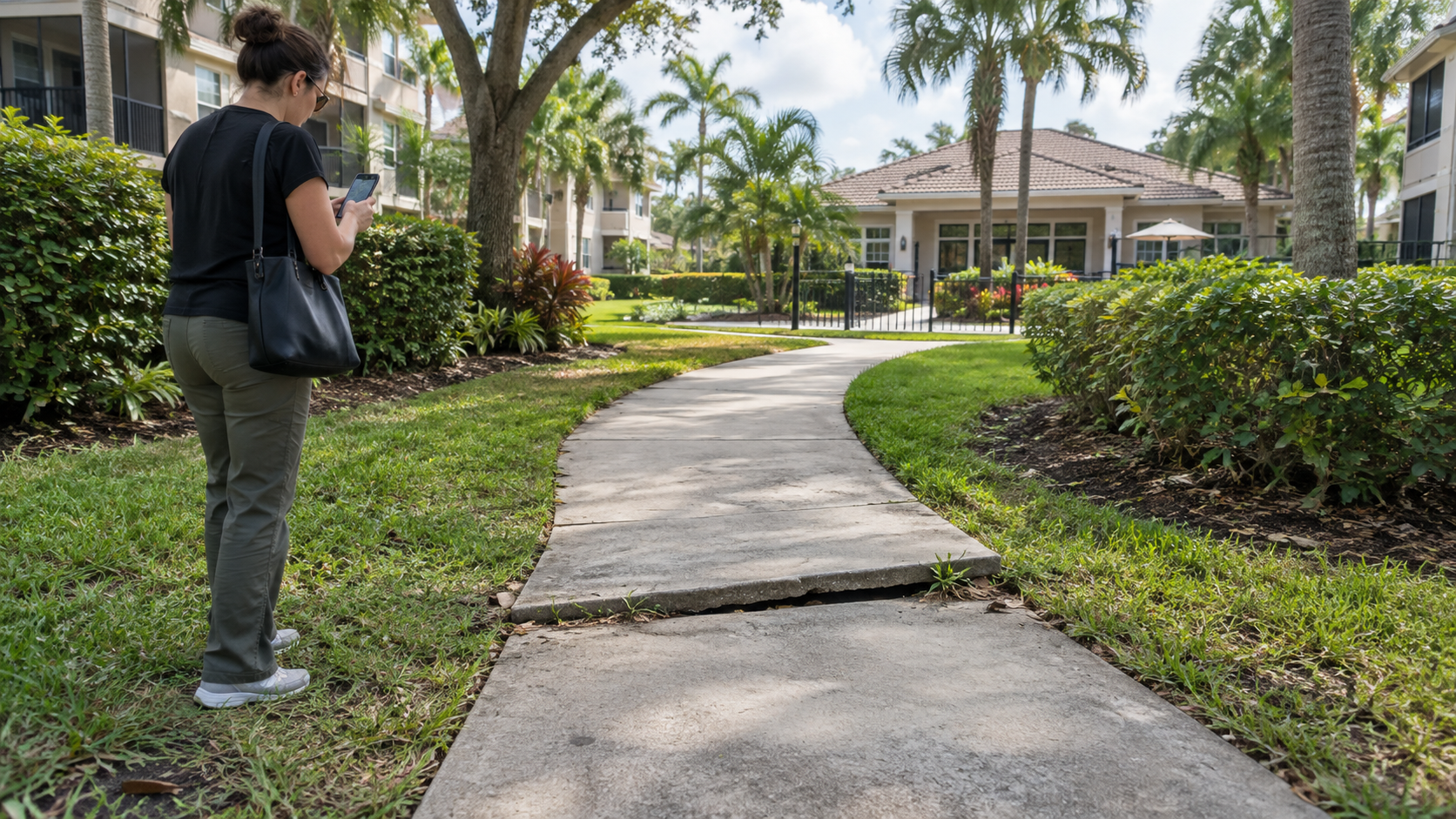
- Sidewalks, walkways, and paver paths, including the lifted, cracked sections that tree roots create in every mature community
- Pools, pool decks, and clubhouses, with all the fencing, gates, latches, and rules that pool safety requires
- Parking lots, garages, and private roads inside the community
- Lighting throughout the common areas
- Gates, fences, and entry systems, both as traffic hazards and as security measures
- Lakes, canals, and retention ponds, the man-made waters we wrote about in our retention pond piece, which sit behind thousands of South Florida homes
- Playgrounds, gyms, tennis and pickleball courts, and the vendors who maintain all of it
One more layer: Nearly every association delegates the day-to-day work to a professional management company, and many hire landscapers, pool services, and security contractors. When maintenance fails, the association and its management company typically share responsibility, and the contracts between them decide who answers for which failure. We name the parties the documents support, which is one reason the records request comes before the demand letter.
The Injury Patterns We See in Association Communities
Falls on Broken or Dark Walkways
The classic HOA case: A resident or guest trips on a lifted sidewalk slab, a broken paver, or an unlit step the board had been hearing about for months. Association cases have a feature ordinary premises cases often lack, a paper trail. Board minutes, maintenance requests, reserve studies, and resident complaints document exactly when the association learned of the hazard and how long it sat. The same notice-and-knowledge framework from our guide to proving negligence in premises cases applies, with better records.
Pool and Drowning Incidents
Community pools concentrate risk: broken gate latches, missing self-closing hardware, fencing gaps, and no barriers between toddlers and water. Florida's Residential Swimming Pool Safety Act sets barrier standards, and association pools that fail them produce the most devastating cases we handle. The attractive nuisance doctrine we covered separately adds another layer where children are drawn to pools, ponds, and equipment the community failed to secure.
Negligent Security Behind the Gate
A gated community sells security, and a broken gate that stands open for months is both a breach of that promise and evidence in a negligent security claim when a resident is attacked or a home is invaded. Florida's HB 837 framework under Section 768.0706 gives multifamily properties a presumption against liability when they implement specific measures, cameras, lighting, and locking devices, which means the checklist an association skipped becomes the plaintiff's breach list. For attacks in community parking areas, everything from our parking facility assault guide applies.
Dog Attacks and Rule Enforcement
Associations write pet rules and sometimes fail to enforce them against a known dangerous dog in the common areas. The dog's owner is the primary defendant under Florida's strict liability dog bite law, and the association's role turns on what it knew and what its own rules obligated it to do.
Vendor Negligence
The landscaper's sprinkler head left in the walkway, the pool company's chemical burn, the pressure-washing crew's soaked marble lobby. The association's duty to maintain safety does not disappear because it hired someone, and the vendor's own liability gets added to the case.
How Suing an Association Actually Works
The claim runs against insurance. Florida associations carry general liability coverage for the common areas because their governing documents and lenders require it. Your claim is presented to that carrier, defended by that carrier's lawyers, and paid by that policy. Special assessments against neighbors to pay injury claims are the stuff of message-board fear, not how insured claims resolve.
Residents, guests, and workers can all bring claims. Your status matters to the duty owed, but association common areas are generally held to the standard owed to invitees: reasonable care in maintenance, inspection, and warning. A resident injured by a hazard the board knew about for a year has the cleanest version of the case.
The governing documents matter. Declarations, bylaws, and the association's own rules define what it undertook to maintain, and an association that assumed a duty in its documents has a hard time disclaiming it in court. The same documents sometimes contain traps, internal deadlines, notice provisions, which is a reason to involve counsel early rather than negotiate alone.
Comparative fault still applies. Expect the carrier to argue you should have seen the hazard, under the 51 percent bar system we explained in our negligencia comparativa guía. The answer is built from photographs, lighting measurements, and the association's own complaint file showing everyone else saw it, too.
The deadline is the standard one. Two years for negligence claims under Florida's statute of limitations, with the practical window far shorter: Hazards get repaired fast once someone is hurt, and the pre-repair photographs are the case. Document first, report second, and let the repair happen after the evidence exists.
What to Do After an Injury in Your Community
Photograph the hazard immediately, before the association's vendor fixes it, with wide shots that show location and close shots that show the defect. Get medical care the same day. Report the incident to the management company in writing and keep your copy; the report creates the record but say no more than the facts. Ask neighbors what they have complained about; long-standing hazards usually have a history, and that history is gold. And before giving any recorded statement to the association's insurer, talk to counsel. The carrier's friendly call is a fault-building exercise, and you are not required to participate in it.
Frequently Asked Questions About HOA and Condo Association Injury Claims
Can you sue an HOA for negligence in Florida?
Yes. Florida homeowners associations owe a duty of reasonable care in maintaining the common areas they control, and an association that fails to fix or warn about known hazards can be held liable for resulting injuries. Claims are typically paid by the association's liability insurance.
Is a condo association liable for injuries in common areas?
Yes, when the injury resulted from the association's failure to reasonably maintain the common elements, lobbies, pools, parking, walkways, elevators and the like, under Chapter 718, Florida Statutes, and premises liability law. The association's management company may share responsibility.
Will my neighbors have to pay if I sue my HOA?
In practice, no. Associations carry general liability insurance for the common areas, and injury claims are defended and paid by the insurance carrier. The special-assessment scenario residents fear is not how insured claims are resolved.
Can a renter or guest sue an association, or only owners?
Renters, guests, and workers can all bring claims. The duty to maintain common areas safely runs to everyone lawfully on the property, not just the owners who pay dues.
What if the HOA knew about the hazard and ignored it?
That knowledge is the heart of the case. Board minutes, maintenance logs, and resident complaints prove when the association learned of the danger, and the gap between notice and repair is what establishes negligence. Long-ignored hazards also strengthen the value of the claim.
How long do I have to sue an HOA for an injury in Florida?
Generally, two years from the injury under Florida's negligence statute of limitations. The evidence window is much shorter, because hazards are usually repaired quickly after an incident, so photographs taken before the fix are often the most important proof in the case.
Hurt in Your Own Community? The Dues Were Supposed to Prevent This
You paid for maintained sidewalks, working gates, and a safe pool deck. When the association collected the money and skipped the upkeep, the law is on your side, and the claim runs against their insurance, not your neighbors. Mausner Group Injury Lawyers handles premises liability cases across Miami-Dade and South Florida, and Eric J. Mausner reviews every case personally.
Llamar 305-344-4878 Para una consulta gratuita, disponible las 24 horas del día, en inglés o español. No pagará nada a menos que ganemos.
This article is for general informational purposes only and does not constitute legal advice. Florida law referenced includes Fla. Stat. Chapters 718 and 720, Sections 767.04, 768.0706, 768.81, and 95.11, and the Residential Swimming Pool Safety Act. Laws change; consult a licensed Florida attorney for advice specific to your situation.